
Why Skills Matter More Than Degrees in Today’s Talent Economy
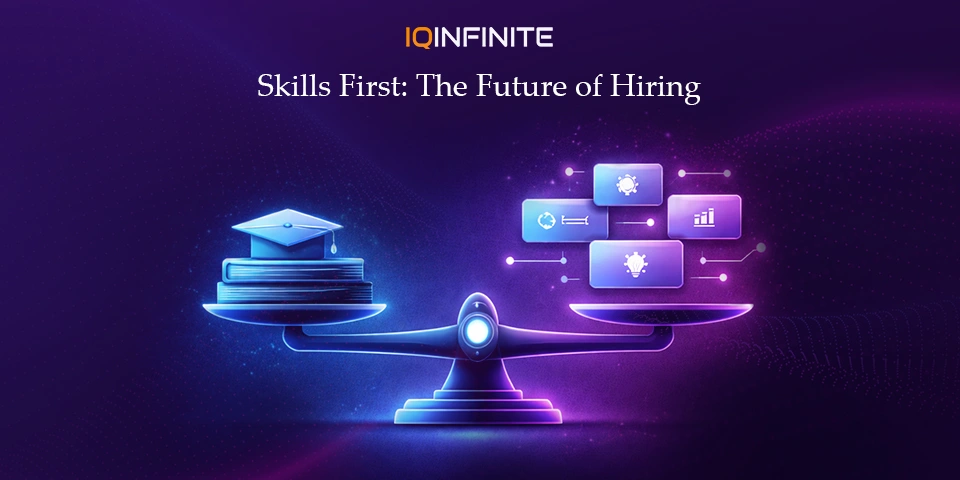
The global talent economy is undergoing a fundamental shift. For decades, academic degrees were considered the primary gateway to employment and career growth. Today, that model is rapidly evolving. As technology accelerates change across industries, skills not degrees are becoming the true currency of employability, supporting a more inclusive and fairer share nationwide of opportunities for talent.
From startups to Fortune 500 companies, employers are prioritizing what candidates can do over where they studied. This skills-first movement is reshaping hiring, workforce development and the future of work itself.
The Rise of the Skills-First Economy
Digital transformation, automation and AI have dramatically shortened the shelf life of traditional knowledge. New tools, platforms and frameworks emerge faster than universities can update curricula. As a result, organizations need talent that can adapt, learn continuously and apply practical skills immediately.
According to global hiring trends:
According to global hiring trends:
- Employers value job-ready skills over formal credentials
- Many high-growth roles did not exist a decade ago
- Continuous upskilling has become a business necessity, not a bonus
This has given rise to a skills-first hiring approach where competencies, portfolios and real-world experience take precedence.
Technology Is Redefining Job Roles
Rapid advances in technologies such as Artificial Intelligence, Cloud Computing, Data Analytics, Cybersecurity and Automation are fundamentally reshaping how work is performed across industries. Traditional job descriptions are no longer sufficient today’s roles demand hybrid skill sets that combine technical proficiency with critical human capabilities like problem-solving, creativity and strategic thinking.
For instance:
For instance:
- Software developers are no longer focused solely on writing code; they are expected to understand cloud platforms, CI/CD pipelines and DevOps practices to build scalable, resilient systems.
- Marketing professionals must go beyond creativity and storytelling by leveraging data analytics, AI-powered tools and automation to drive personalized, performance-based campaigns.
- Business leaders and managers are required to pair strong domain expertise with digital fluency, enabling them to make data-driven decisions and lead technology-enabled teams effectively.
In this fast-changing landscape, traditional degrees often struggle to keep pace with real-world requirements. Curricula take years to update, while technology evolves in months. Skills, on the other hand, are dynamic they can be learned continuously, refined through hands-on experience and applied immediately to solve real business problems.
Skills Offer Faster Career Mobility
Unlike traditional degrees which often require years of study and substantial financial investment skills can be acquired faster, more affordably and with immediate impact. Today’s professionals have multiple pathways to build relevant capabilities, including:
- Online courses and micro-credentials that target in-demand skills
- Bootcamps and hands-on projects focused on real-world applications
- Industry-recognized certifications that validate job-ready expertise
- Freelancing and problem-solving in real environments that build practical experience
This flexibility empowers individuals to pivot careers, enter emerging fields and remain competitive without stepping away from the workforce or returning to full-time formal education. More importantly, it democratizes opportunity, reducing barriers tied to cost, location and traditional academic backgrounds.
Employers Want Proof, Not Paper
Hiring practices have evolved. Employers are no longer impressed by credentials alone they want evidence of capability and impact. Modern recruitment increasingly prioritizes:
- Project portfolios that showcase applied skills
- GitHub repositories and live code samples
- Case studies, simulations and role-based challenges
- Skill-based assessments and real-time evaluations
Organizations seek confidence that candidates can deliver value from day one. While a degree may indicate foundational knowledge, skills demonstrate readiness, adaptability and execution.
Leading companies now rely on:
Leading companies now rely on:
- AI-driven screening and skills assessments
- Role-specific problem-solving tasks
- Competency frameworks aligned with measurable business outcomes
Soft Skills Matter More Than Ever
As automation and AI handle routine tasks, human skills are becoming a key differentiator. In today’s collaborative, technology-enabled workplaces, professionals must excel in:
- Critical thinking and decision-making
- Clear communication and collaboration
- Emotional intelligence and empathy
- Adaptability in fast-changing environments
- Creative problem-solving
These skills enable individuals to work effectively alongside intelligent systems, lead diverse teams and manage complexity areas where formal education alone often falls short.
The Future Belongs to Lifelong Learners
The modern talent economy rewards those who commit to continuous learning. Degrees are static, but skills evolve constantly. Professionals who regularly upskill are more resilient, more employable and better prepared for disruption.
Organizations recognize this shift and are investing heavily in:
Organizations recognize this shift and are investing heavily in:
- Internal learning and development platforms
- Skill-based workforce planning models
- Large-scale reskilling and upskilling initiatives
This reflects a fundamental move away from credential-based validation toward capability-driven growth and performance.
Conclusion
In today’s rapidly evolving talent economy, degrees are no longer a guaranteed pathway to success. Skills define relevance, performance and long-term career sustainability. While formal education continues to provide an important foundation, it is technical, digital and human skills that determine who thrive whether in high-growth tech roles or operational environments such as an abattoir, where safety, process efficiency and compliance rely heavily on hands-on expertise.
As technology reshapes industries and job roles, the true winners will be those who can learn, unlearn and apply new skills continuously. In the future of work, what you can do will always matter more than what’s written on your certificate.
As technology reshapes industries and job roles, the true winners will be those who can learn, unlearn and apply new skills continuously. In the future of work, what you can do will always matter more than what’s written on your certificate.