
Why Most Cloud Migrations Fail and How DevOps Teams Prevent It
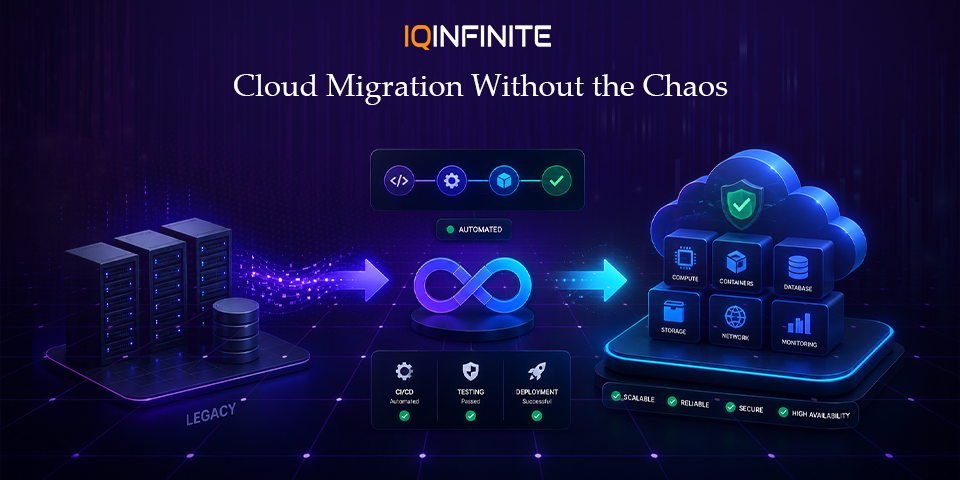
Cloud adoption continues to accelerate as businesses seek greater scalability, flexibility and operational efficiency. However, despite the benefits, many organizations struggle to achieve successful cloud migration outcomes. Delays, budget overruns, security issues and performance problems often prevent projects from delivering their expected value.
A successful migration requires more than simply moving workloads to the cloud. It demands careful planning, modern infrastructure practices and strong DevOps collaboration. Understanding why migrations fail is the first step toward building an effective cloud transformation strategy that delivers long-term business results.
The Growing Importance of Cloud Migration
Organizations across industries are investing in cloud migration services to modernize legacy systems, improve scalability and reduce infrastructure management costs.
Common goals include:
Common goals include:
- Improved business agility
- Reduced operational expenses
- Better disaster recovery
- Faster application deployment
- Enhanced scalability
- Increased system reliability
However, achieving these benefits requires a structured approach to enterprise cloud migration rather than a simple lift-and-shift process.
Common Reasons Cloud Migrations Fail
Many cloud projects encounter challenges because organizations underestimate the complexity of migration.
Lack of a Clear Strategy
One of the biggest mistakes is moving applications without a defined cloud transformation strategy.
Without proper planning, organizations often face:
Without proper planning, organizations often face:
- Unexpected downtime
- Performance bottlenecks
- Cost overruns
- Security gaps
Successful migrations begin with clear business objectives and technical assessments.
Moving Legacy Applications Without Modernization
Many companies attempt to migrate outdated systems directly to the cloud.
While this may seem faster, legacy applications are often not designed for modern cloud environments.
This is where enterprise application modernization becomes critical. Modernizing applications before migration helps improve performance, scalability and long-term maintainability.
While this may seem faster, legacy applications are often not designed for modern cloud environments.
This is where enterprise application modernization becomes critical. Modernizing applications before migration helps improve performance, scalability and long-term maintainability.
Poor Infrastructure Planning
Cloud infrastructure requires careful design.
Common issues include:
Common issues include:
- Incorrect resource allocation
- Weak network architecture
- Poor security configurations
- Lack of monitoring
Without proper planning, cloud environments become difficult to manage and expensive to operate.
Security and Compliance Challenges
Many organizations focus heavily on migration speed while overlooking security requirements.
Challenges often include:
Challenges often include:
- Data protection concerns
- Access management issues
- Regulatory compliance requirements
- Misconfigured cloud services
Security must be integrated throughout the migration process rather than addressed after deployment.
The Role of DevOps in Successful Cloud Migration
DevOps teams play a crucial role in ensuring migration success.
By combining automation, collaboration and continuous delivery practices, DevOps helps organizations reduce migration risks while improving deployment efficiency.
Key DevOps contributions include:
By combining automation, collaboration and continuous delivery practices, DevOps helps organizations reduce migration risks while improving deployment efficiency.
Key DevOps contributions include:
- Infrastructure automation
- Continuous testing
- Automated deployments
- Monitoring and observability
- Configuration management
These capabilities help organizations execute large-scale enterprise cloud migration projects with greater confidence.
Enterprise Application Modernization Before Migration
Cloud migration is often the ideal opportunity to modernize existing systems.
Rather than simply moving legacy infrastructure, businesses can adopt modern architectures that are better suited for cloud environments.
Examples include:
Rather than simply moving legacy infrastructure, businesses can adopt modern architectures that are better suited for cloud environments.
Examples include:
- Microservices architectures
- API-driven platforms
- Containerized applications
- Cloud-native services
- Serverless computing
Investing in enterprise application modernization helps organizations maximize the value of their cloud investments.
Best Practices DevOps Teams Use to Prevent Migration Failures
Conduct a Comprehensive Assessment
Before migration begins, teams should evaluate:
- Existing applications
- Infrastructure dependencies
- Security requirements
- Performance expectations
This helps identify potential risks early.
Automate Infrastructure Deployment
Using Infrastructure as Code (IaC) tools such as Terraform enables consistent and repeatable deployments.
Automation reduces human error and improves reliability throughout the migration process.
Automation reduces human error and improves reliability throughout the migration process.
Implement Continuous Testing
Testing should occur throughout migration, not just at the end.
Automated testing helps validate:
Automated testing helps validate:
- Application functionality
- Performance
- Security
- Infrastructure configurations
Monitor Everything
Visibility is essential during migration.
Modern monitoring solutions help track:
Modern monitoring solutions help track:
- System health
- Application performance
- Resource utilization
- Security events
This allows teams to respond quickly when issues arise.
Optimize for Cloud-Native Operations
Successful cloud transformation strategy initiatives focus on leveraging cloud capabilities rather than replicating traditional infrastructure models.
Organizations should embrace:
Organizations should embrace:
- Auto-scaling
- Managed services
- Container orchestration
- Event-driven architectures
These approaches improve efficiency and scalability.
Business Benefits of Successful Cloud Migration
When properly executed, cloud migration delivers significant business value.
Benefits include:
Benefits include:
- Faster innovation cycles
- Improved operational efficiency
- Reduced infrastructure costs
- Enhanced security
- Better application performance
- Greater scalability
Organizations that combine cloud migration services with modernization and DevOps practices are more likely to achieve these outcomes.
Conclusion
Many cloud migration projects fail because organizations focus on technology alone while neglecting strategy, modernization and operational readiness. A successful enterprise cloud migration requires a clear roadmap, strong collaboration and a well-defined cloud transformation strategy that aligns technology initiatives with business goals.
By embracing DevOps practices and prioritizing enterprise application modernization, businesses can avoid common migration pitfalls and build cloud environments that are secure, scalable and future-ready. In 2026, successful cloud adoption is no longer just about moving workloads it is about transforming how applications, infrastructure and teams operate in the modern digital landscape.
By embracing DevOps practices and prioritizing enterprise application modernization, businesses can avoid common migration pitfalls and build cloud environments that are secure, scalable and future-ready. In 2026, successful cloud adoption is no longer just about moving workloads it is about transforming how applications, infrastructure and teams operate in the modern digital landscape.