
User Research & Competitive Analysis: Building Smarter Products with Real Insights
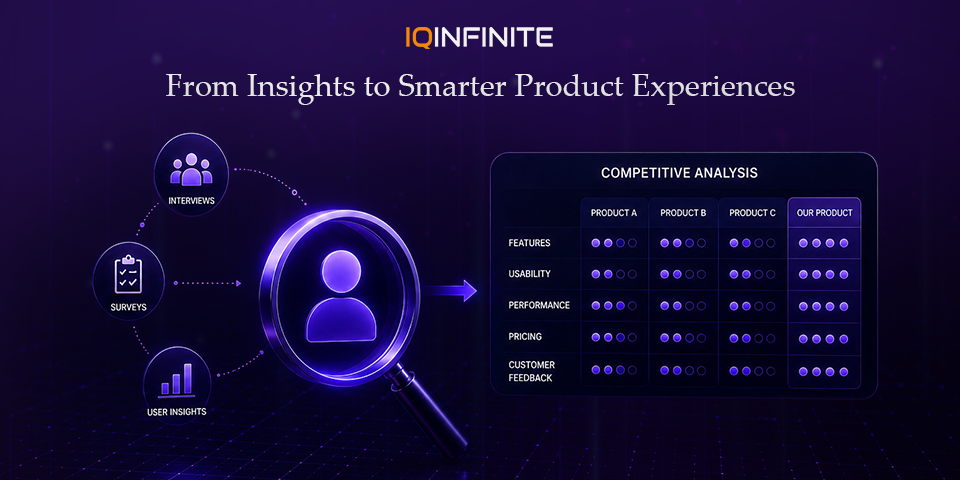
In today’s hyper-competitive digital market, building a product based on assumptions is one of the fastest ways to fail. Modern businesses are no longer winning simply because they launch faster, they win because they deeply understand users, market behaviour and competitive gaps.
User Research and Competitive Analysis have become the foundation of successful digital products in 2026. From AI-powered SaaS platforms to mobile apps and enterprise systems, companies are now investing heavily in data-driven product strategies that reduce risk and improve product-market fit.
Modern research is no longer limited to surveys and spreadsheets. Today’s leading product teams combine AI-driven analytics, behavioural intelligence, Realtime feedback systems and competitor benchmarking to create smarter, faster and more scalable digital experiences. Advanced user behaviour analysis tools now help businesses collect deeper customer insights and optimize digital experiences more efficiently.
Why User Research Matters More Than Ever
- Personalized experiences
- Faster interactions
- Intuitive interfaces
- AI-powered recommendations
- Seamless cross-platform usability
- Privacy-focused digital experiences
- Real-time support and responsiveness
User research for product development helps organizations discover:
- What users actually need
- Pain points in current workflows
- Behavioural patterns
- User motivations
- Purchase decisions
- Product usability gaps
- Feature adoption trends
- Customer retention challenges
Modern User Research Techniques in 2026
Qualitative Research
- User interviews
- Focus groups
- Product feedback sessions
- Customer journey mapping
- Usability testing
- Behavioural observation
- Community discussions
Quantitative Research
- User analytics
- Session recordings
- Heatmaps
- Conversion tracking
- Retention analysis
- Funnel optimization
- A/B testing
- Engagement metrics
- Customer satisfaction scores
The Role of AI in User Research
AI-powered research tools can now:
- Analyse customer sentiment
- Detect behavioural patterns
- Predict churn risks
- Automate survey analysis
- Generate user personas
- Identify usability issues
- Recommend product improvements
- Personalize experiences dynamically
This allows faster decision-making and smarter product iterations powered by intelligent user behaviour analysis tools.
Why Competitive Analysis Is Critical
Product competitive analysis helps companies understand:
- Industry trends
- Competitor strengths
- Market positioning
- Pricing strategies
- Feature gaps
- Customer expectations
- Emerging technologies
- Branding approaches
- User experience standards
For growing businesses, competitive analysis for startups is especially important because it helps identify market opportunities early while minimizing product and marketing risks.
Key Areas of Competitive Analysis
Product Experience Analysis
- User interface quality
- Navigation flow
- Onboarding experience
- Accessibility
- Performance speed
- Mobile responsiveness
- Customer engagement
Technology Stack Analysis
- AI integrations
- Cloud infrastructure
- Scalable backend systems
- Automation workflows
- Security architecture
- API ecosystems
- Real-time data processing
Marketing & SEO Analysis
- Content strategies
- SEO performance
- Keyword positioning
- Social media engagement
- Paid advertising campaigns
- Conversion funnels
- Audience targeting
Building Smarter Products with Data-Driven Insights
This leads to:
- Faster product-market fit
- Higher user retention
- Reduced development costs
- Better feature prioritization
- Improved customer satisfaction
- Stronger business scalability
- Increased conversion rates
- Smarter product decisions
The Rise of Continuous Research
Successful companies now implement continuous research cycles that include:
- Real-time analytics monitoring
- Ongoing usability testing
- Customer feedback loops
- Market trend analysis
- Competitor tracking
- AI-driven reporting
- Predictive business intelligence
Conclusion
Modern digital products succeed when they solve real user problems efficiently and intelligently.
Organizations that prioritize user insights and market intelligence gain a significant competitive advantage in today’s crowded digital ecosystem.
By combining advanced User Research methodologies with strategic Competitive Analysis, businesses can build smarter, faster and more innovative products that truly resonate with users.
The future of successful product development belongs to companies that listen to their users, understand the market and make decisions powered by real insights.