
How a Terraform Infrastructure Provisioner Company Simplifies Multi-Cloud Deployment
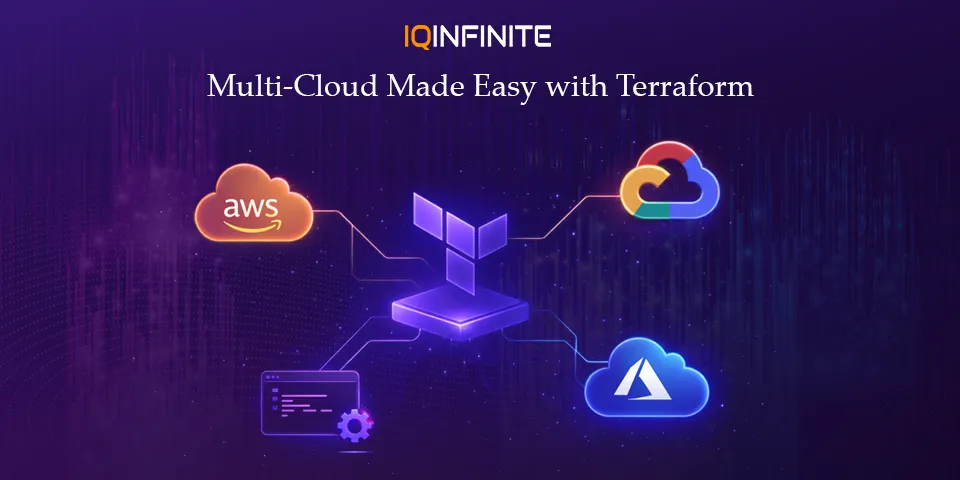
In today’s cloud-first world, enterprises are no longer dependent on a single cloud provider. Instead, they are embracing a multi-cloud deployment strategy to increase flexibility, reduce vendor lock-in, improve resilience and optimize operational costs.
However, managing infrastructure across multiple cloud platforms introduces complexity. Different APIs, service structures, compliance models and configuration standards can create operational chaos if not handled correctly.
This is where a Terraform infrastructure provisioner company plays a critical role bringing automation, governance and scalability to modern cloud environments through structured terraform infrastructure provisioning.
Understanding the Complexity of Multi-Cloud Environments
Adopting a multi-cloud model offers strategic advantages, but it also introduces technical and operational challenges.
Inconsistent Infrastructure Configurations
Each cloud provider has its own architecture patterns and configuration standards. Without centralized automation, teams often experience inconsistencies across environments, leading to configuration errors and increased terraform infrastructure drift.
Governance and Compliance Challenges
Organizations operating across multiple clouds must maintain consistent security policies, tagging standards and compliance controls. Without structured automation, enforcing governance becomes difficult and error-prone.
Operational Overhead
Managing AWS, Azure, Google Cloud and private environments requires specialized expertise. This increases operational complexity and cost, especially when infrastructure changes need to be tracked and validated across platforms.
A poorly managed multi-cloud environment can quickly become fragmented and inefficient undermining the benefits of the original multi-cloud deployment strategy.
A poorly managed multi-cloud environment can quickly become fragmented and inefficient undermining the benefits of the original multi-cloud deployment strategy.
What Is Terraform Infrastructure Provisioning?
Terraform, an Infrastructure as Code (IaC) tool, enables organizations to define and manage infrastructure through declarative configuration files. Instead of manually creating resources, teams automate the entire lifecycle of infrastructure.
A professional Terraform infrastructure provisioner company elevates this practice by implementing structured terraform infrastructure provisioning frameworks that include:
A professional Terraform infrastructure provisioner company elevates this practice by implementing structured terraform infrastructure provisioning frameworks that include:
- Version-controlled infrastructure definitions
- Automated deployment pipelines
- Policy enforcement mechanisms
- Secure state management
- Continuous drift detection
This ensures that infrastructure remains consistent, scalable and aligned with organizational standards.
How a Terraform Infrastructure Provisioner Company Simplifies Multi-Cloud Deployment
1. Standardized Infrastructure Across Cloud Providers
One of the primary benefits of structured terraform infrastructure provisioning is consistency. Provisioner companies create reusable modules and templates that standardize infrastructure patterns across all cloud platforms.
This eliminates duplication, reduces configuration errors and minimizes terraform infrastructure drift between environments.
This eliminates duplication, reduces configuration errors and minimizes terraform infrastructure drift between environments.
2. Automated and Auditable Deployment Workflows
Manual deployments increase the risk of misconfigurations and compliance violations. Terraform provisioners integrate infrastructure into automated CI/CD pipelines, ensuring every change is:
- Validated before deployment
- Approved through governance workflows
- Logged for auditability
- Reproducible across environments
This approach strengthens the overall multi-cloud deployment strategy by making infrastructure changes predictable and secure.
3. Proactive Drift Detection and Remediation
Infrastructure drift occurs when cloud resources are modified outside the defined configuration. Over time, this leads to instability and compliance risks.
A mature provisioning company continuously monitors for terraform infrastructure drift, identifying unauthorized or unintended changes and enabling corrective action before they impact production systems.
This ensures infrastructure remains aligned with declared configurations at all times.
A mature provisioning company continuously monitors for terraform infrastructure drift, identifying unauthorized or unintended changes and enabling corrective action before they impact production systems.
This ensures infrastructure remains aligned with declared configurations at all times.
4. Policy-as-Code for Governance
Enterprise-grade Terraform provisioners implement policy frameworks that enforce compliance automatically. These policies can:
- Restrict resource deployments to approved regions
- Enforce tagging standards for cost visibility
- Prevent insecure networking configurations
- Validate compliance requirements before provisioning
By integrating governance into infrastructure workflows, organizations strengthen their multi cloud management services capabilities.
5. Secure State and Secrets Management
Terraform relies on state files to track resources. Provisioner companies implement secure remote storage and access control mechanisms to protect sensitive infrastructure data.
They also integrate centralized secrets management systems, ensuring credentials are not exposed within deployment workflows.
This structured approach strengthens security across a distributed multi-cloud deployment strategy.
They also integrate centralized secrets management systems, ensuring credentials are not exposed within deployment workflows.
This structured approach strengthens security across a distributed multi-cloud deployment strategy.
6. Scalability and Modular Architecture
Provisioner companies design infrastructure using modular components, allowing organizations to:
- Reuse validated templates
- Accelerate environment creation
- Scale infrastructure without rewriting configurations
- Maintain architectural consistency
Modular terraform infrastructure provisioning enables rapid expansion without sacrificing governance or control.
The Strategic Value of Multi Cloud Management Services
As cloud ecosystems grow more complex, organizations require structured multi cloud management services that go beyond basic provisioning.
A Terraform-focused partner provides:
A Terraform-focused partner provides:
- Centralized infrastructure governance
- Continuous compliance monitoring
- Automated cost management practices
- Performance and observability integrations
- Infrastructure maturity assessments
This transforms infrastructure from a manual operational burden into a strategic enabler of innovation.
Strengthening Multi-Cloud Deployment with Automation
A well-designed multi-cloud deployment strategy depends on consistency, visibility and automation. Terraform infrastructure provisioning ensures:
- Faster environment setup
- Reduced configuration inconsistencies
- Controlled change management
- Continuous terraform infrastructure drift detection
- Scalable and resilient infrastructure design
Without automation, multi-cloud environments quickly become fragmented and difficult to manage.
The Future of Terraform and Multi-Cloud Orchestration
Cloud infrastructure management is evolving toward intelligent automation. Organizations are increasingly adopting:
- Event-driven infrastructure provisioning
- Continuous compliance validation
- Real-time drift monitoring
- AI-assisted infrastructure optimization
As these trends accelerate, structured terraform infrastructure provisioning will remain foundational to successful cloud operations.
Conclusion
Managing infrastructure across multiple cloud providers is complex but it doesn’t have to be chaotic.
A Terraform infrastructure provisioner company simplifies multi-cloud deployment by delivering structured automation, governance and scalability. Through mature terraform infrastructure provisioning, organizations can:
A Terraform infrastructure provisioner company simplifies multi-cloud deployment by delivering structured automation, governance and scalability. Through mature terraform infrastructure provisioning, organizations can:
- Minimize terraform infrastructure drift
- Execute a reliable multi-cloud deployment strategy
- Strengthen compliance and security
- Optimize operational efficiency
- Enhance structured multi cloud management services
By transforming infrastructure into code and embedding automation at every level, enterprises gain the agility and confidence needed to scale in a competitive digital landscape.