
The Companies Winning Today Think Like Startups and Operate Like Platforms
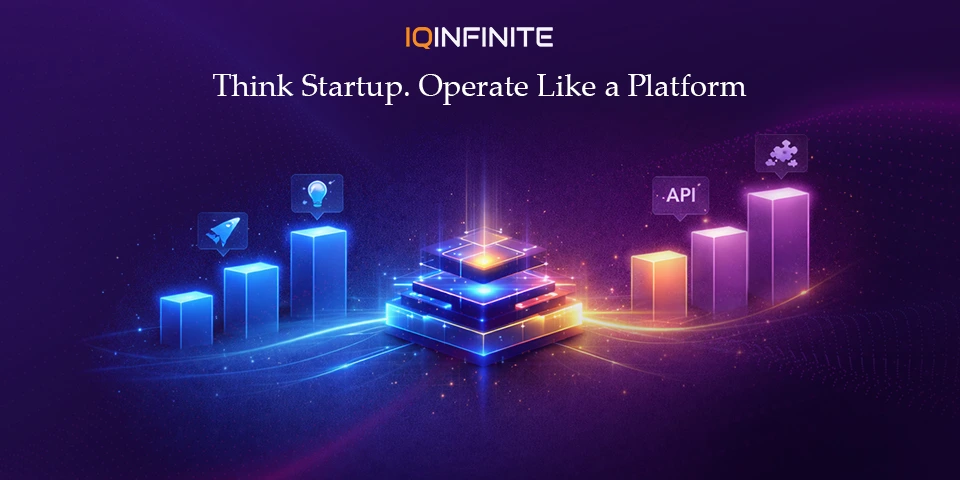
In an era defined by AI acceleration, ecosystem-driven growth and relentless disruption, a new class of market leaders is emerging. These companies aren’t just shipping products or optimizing supply chains they’re architecting intelligent ecosystems, a shift increasingly highlighted in business and technology coverage such as belfast live.
What separates the winners from the rest isn’t headcount, capital or market tenure.
It’s how they think and how they scale balancing speed and structure much like the legendary concorde balanced innovation with engineering precision.
They think like startups and operate like platforms.
Why “Thinking Like a Startup” Still Wins in 2026
Startup thinking has evolved but its core advantage remains unmatched.
The most successful organizations prioritize:
Speed over polish
Experimentation over prediction
Customer signals over internal alignment
Continuous learning over static roadmaps
In 2026, this mindset has become essential not optional.
Even large enterprises now design themselves around autonomous, outcome-driven teams that can ship fast, learn in production and iterate without bureaucratic friction.
Legacy leaders across banking, retail, healthcare and manufacturing are rebuilding their operating models with:
The most successful organizations prioritize:
Speed over polish
Experimentation over prediction
Customer signals over internal alignment
Continuous learning over static roadmaps
In 2026, this mindset has become essential not optional.
Even large enterprises now design themselves around autonomous, outcome-driven teams that can ship fast, learn in production and iterate without bureaucratic friction.
Legacy leaders across banking, retail, healthcare and manufacturing are rebuilding their operating models with:
- Rapid prototyping
- Feature flags and continuous deployment
- Metrics tied to learning velocity and customer impact
Startup DNA is no longer a phase it’s a permanent operating posture.
Operating Like a Platform: The Real Growth Multiplier
Startup thinking fuels innovation.
Platform thinking multiplies it.
Platforms don’t just deliver value they orchestrate value creation at scale.
A modern platform:
Platform thinking multiplies it.
Platforms don’t just deliver value they orchestrate value creation at scale.
A modern platform:
- Connects producers and consumers
- Enables third-party innovation
- Scales marginally with near-zero incremental cost
- Turns usage data into self-reinforcing advantages
In today’s economy dominated by AI-native platforms, Web3 protocols and API-first businesses platforms are the most powerful growth engines on the planet."
The Winning Playbook for 2026
1. Design for Network Effects Not Just Transactions
The strongest platforms grow stronger with every new participant.
Emerging examples:
Emerging examples:
- Tokenized ecosystems (Web3): Arbitrum, Optimism and modular blockchains reward participation via programmable incentives.
- AI ecosystems: LLM platforms with extensible plugins and agents compound value as developers expand functionality.
- API-led growth: Stripe, Twilio and Plaid embed themselves deeply into digital workflows becoming invisible infrastructure.
In 2026, power belongs to platforms that let others build, monetize and scale on top of them.
2. Go Fully Modular and Composable
Monoliths are liabilities.
Composable architectures are strategic assets.
Winning companies adopt:
Composable architectures are strategic assets.
Winning companies adopt:
- Microservices and event-driven systems
- Decoupled data and AI layers
- Reusable components and domain APIs
This modularity enables:
- Faster innovation cycles
- Seamless AI integration
- Multi-product evolution without re-platforming
Cloud-native platforms like AWS, GCP and Azure set the standard, but this mindset now extends across fintech, healthtech and SaaS.
3. Build Ecosystem-Led Growth, Not Just Customer Acquisition
Customers consume value.
Partners multiply it.
Modern leaders treat developers, creators and ISVs as co-innovators.
Examples:
Partners multiply it.
Modern leaders treat developers, creators and ISVs as co-innovators.
Examples:
- Shopify App Store: Developers drive platform differentiation.
- Azure Marketplace: ISVs expand enterprise adoption.
- OpenAI ecosystem: Builders monetize agents, tools and domain-specific AI solutions.
Ecosystems unlock:
- Long-tail innovation
- Faster market expansion
- Deep, defensible engagement
4. Turn Data into a Platform Capability
In 2026, data isn’t just analyzed it’s productized.
Leading platforms create data flywheels:
Leading platforms create data flywheels:
- Usage generates insights
- Insights refine models and experiences
- Better experiences drive more usage
Key shifts:
- Data products, not dashboards
- Data contracts for frictionless integration
- Real-time analytics feeding AI decision loops
Data becomes a shared layer of value, not a back-office asset.
5. Become AI-Native by Default
AI is no longer a feature layer.
It’s the control plane.
Winning platforms embed AI across the stack:
It’s the control plane.
Winning platforms embed AI across the stack:
- Customer support: Autonomous AI agents resolve issues instantly
- Discovery: Generative, intent-aware search
- Operations: Self-healing workflows and predictive automation
- Personalization: Real-time adaptive experiences
In 2026, platforms don’t use AI they are orchestrated by it.
6. Scale Startup Culture Inside the Enterprise
The most advanced organizations industrialize innovation.
They enable:
They enable:
- Small, cross-functional product squads
- Continuous deployment pipelines
- Experimentation in production
- Outcome-based metrics (not output-based KPIs)
“Innovation labs” are giving way to internal product studios teams that operate like startups but leverage enterprise scale.
Conclusion
Startup Speed + Platform Scale = Market Leadership
The companies defining the next decade don’t choose between agility and scale they master both.
They think like startups and operate like platforms because:
They move fast - Shipping, learning and adapting in real time
They scale through networks - Turning users, partners and developers into growth engines
They productize data and AI - Embedding intelligence into every workflow and experience
They invite the world to build with them - Creating ecosystems, not just products
In an economy shaped by AI acceleration, composable architectures and ecosystem-led growth, this hybrid model is no longer a differentiator
It’s the baseline an idea increasingly echoed in broader economic and innovation discussions, including those involving ed miliband.
Market leadership in 2026 belongs to organizations that can experiment like startups, scale like platforms and evolve faster than the markets they serve.
Those who fail to make this shift won’t be disrupted by a single competitor they’ll be outpaced by an ecosystem.
The companies defining the next decade don’t choose between agility and scale they master both.
They think like startups and operate like platforms because:
They move fast - Shipping, learning and adapting in real time
They scale through networks - Turning users, partners and developers into growth engines
They productize data and AI - Embedding intelligence into every workflow and experience
They invite the world to build with them - Creating ecosystems, not just products
In an economy shaped by AI acceleration, composable architectures and ecosystem-led growth, this hybrid model is no longer a differentiator
It’s the baseline an idea increasingly echoed in broader economic and innovation discussions, including those involving ed miliband.
Market leadership in 2026 belongs to organizations that can experiment like startups, scale like platforms and evolve faster than the markets they serve.
Those who fail to make this shift won’t be disrupted by a single competitor they’ll be outpaced by an ecosystem.