
How Smart Restaurant Automation Improves Speed, Accuracy & Profitability
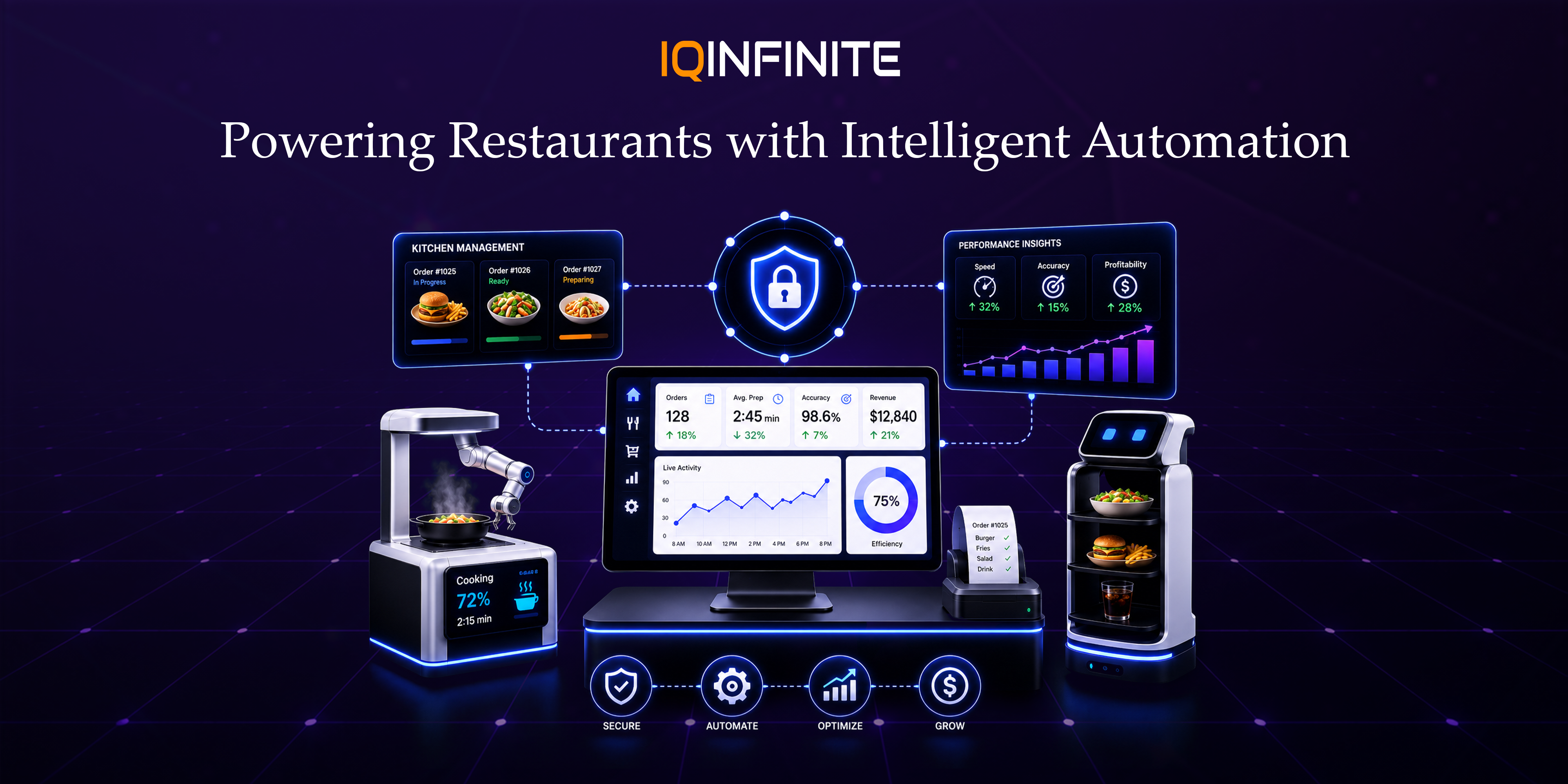
Smart restaurant automation refers to the use of advanced digital technologies and Restaurant Management Software to automate routine restaurant operations. It connects various aspects of the business including ordering, billing, kitchen workflows, inventory management, staff scheduling, customer engagement and analytics into a unified ecosystem.
Unlike traditional restaurant management systems, today's automation solutions leverage AI Restaurant Technology, cloud computing, IoT, QR code ordering, predictive analytics and real-time reporting to optimize every stage of restaurant operations and support Restaurant Digital Transformation.
Whether it's a quick-service restaurant (QSR), café, cloud kitchen, fine-dining establishment or multi-location restaurant chain, modern Restaurant Technology Solutions help businesses deliver faster service while reducing operational complexity
Why Restaurant Automation is Becoming Essential
Smart Restaurant Management Software and Restaurant Technology Solutions address these challenges by creating efficient workflows that improve operational performance and customer satisfaction simultaneously while accelerating Restaurant Digital Transformation.
At the same time, restaurant owners face challenges such as:
- Rising labor costs
- Staff shortages
- Order inaccuracies
- Food waste
- Inventory mismanagement
- Increasing delivery demands
- Higher customer expectations
How Smart Restaurant Automation Improves Speed
1. Faster Order Processing with Digital Ordering Systems
Modern Restaurant POS System solutions introduce:
- QR Code Menu Ordering
- Self-Service Kiosks
- Mobile Ordering Apps
- Tablet-Based Ordering
- AI Voice Ordering
- Online Ordering Integration
Benefits:
- Faster customer service
- Reduced queue times
- Increased table turnover
- Improved dining experience
2. AI-Powered Kitchen Display Systems (KDS)
AI-powered KDS solutions:
- Prioritize orders automatically
- Track preparation times
- Reduce communication errors
- Improve kitchen coordination
- Optimize cooking workflows
3. Automated Table and Reservation Management
Smart reservation systems use AI to:
- Predict customer arrivals
- Optimize seating arrangements
- Reduce waiting times
- Manage walk-ins efficiently
- Improve table utilization
4. Eliminates Manual Ordering Errors
Automation minimizes mistakes by allowing customers to customize orders digitally, reducing dependence on handwritten notes or verbal communication.
Integrated POS systems ensure that every order reaches the kitchen exactly as requested.
This leads to:
- Fewer order corrections
- Lower refund rates
- Better customer experiences
- Higher repeat business
5. Real-Time Inventory Management
Automated inventory management systems continuously monitor stock levels, ingredient consumption and supplier orders.
Advanced systems can:
- Track ingredient usage
- Predict inventory shortages
- Generate automatic purchase orders
- Reduce food wastage
- Monitor supplier performance
6. Integrated POS and Payment Automation
Automation enables:
- Faster billing
- Contactless payments
- Split bill management
- Multi-payment support
- Automatic sales reporting
7. Reduces Operational Costs
Restaurants can optimize labour allocation while minimizing operational inefficiencies.
Cost savings come from:
- Reduced labour expenses
- Lower administrative workload
- Fewer billing mistakes
- Better inventory utilization
- Reduced food waste
8. Improves Customer Retention with AI Personalization
AI-powered CRM systems analyse customer behaviour and purchase history to provide:
- Personalized promotions
- Loyalty rewards
- Smart recommendations
- Birthday offers
- Automated marketing campaigns
9. Data-Driven Business Decisions
Restaurant owners can monitor:
- Peak business hours
- Best-selling menu items
- Customer preferences
- Employee productivity
- Sales performance
- Food costs
- Profit margins
Emerging Restaurant Automation Trends in 2026
AI-Powered Demand Forecasting: Artificial Intelligence predicts customer demand based on historical sales, weather conditions, local events and seasonal trends, helping restaurants optimize staffing and inventory.
Voice AI Ordering: Voice-enabled ordering assistants are improving customer service through natural language interactions for dine-in, drive-thru and phone orders.
Contactless Dining Experiences: QR code menus, digital payments and mobile ordering continue to enhance convenience while reducing wait times.
Smart Kitchen Automation: IoT-enabled kitchen equipment monitors cooking temperatures, equipment performance and maintenance schedules to improve efficiency and food quality.
Cloud-Based Restaurant Management: Cloud-native platforms allow restaurant owners to monitor multiple locations, manage operations remotely and access real-time reports from anywhere.
AI-Powered Customer Analytics: Advanced analytics tools help restaurants understand customer behaviour, predict purchasing patterns and create personalized marketing campaigns.
Sustainable Restaurant Technology: Automation supports sustainability by reducing food waste, optimizing energy usage and improving inventory planning, helping restaurants lower costs while meeting environmental goals.
Best Practices for Implementing Restaurant Automation
- Choose a cloud-based restaurant management platform.
- Integrate POS, inventory, kitchen and CRM systems into a unified solution.
- Automate repetitive operational tasks.
- Train staff to work efficiently with new technologies.
- Monitor real-time analytics to optimize business performance.
- Regularly update software for security and feature enhancements.
- Use AI-driven customer insights to improve marketing strategies.
- Continuously optimize workflows based on operational data.
Benefits of Smart Restaurant Automation
- Faster order processing
- Improved order accuracy
- Shorter customer waits times
- Better inventory control
- Reduced food waste
- Increased employee productivity
- Enhanced customer satisfaction
- Higher customer retention
- Improved profit margins
- Scalable multi-location management
Conclusion
From AI-powered ordering and cloud-based POS systems to smart kitchen management, predictive inventory and personalized customer engagement, restaurant automation enables businesses to deliver faster service, eliminate costly errors and maximize profitability.
Whether you're operating a quick-service restaurant, café, cloud kitchen or restaurant chain, investing in smart restaurant automation is no longer just a technological upgrade it is a strategic move toward sustainable growth, operational excellence and long-term business success.