
Secure POS Booking Systems: Protecting Transactions with AI and Biometrics
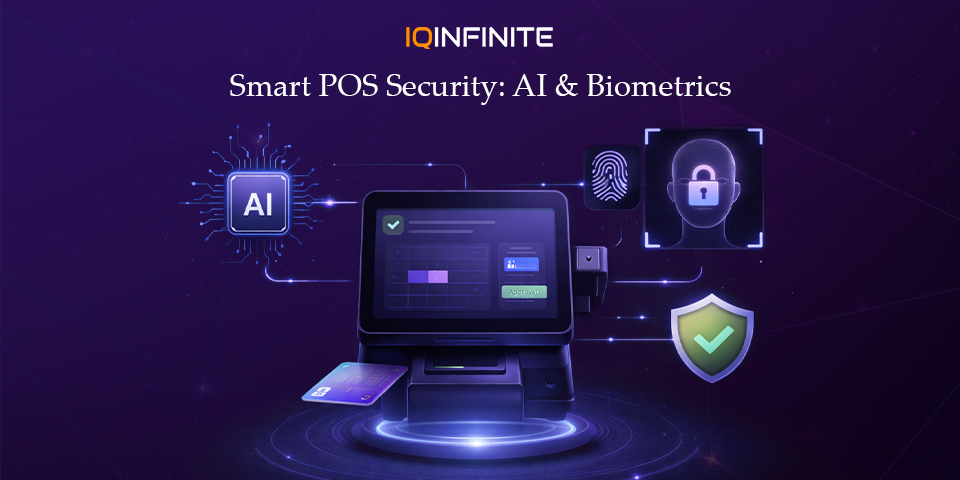
In today’s hyper-digital economy, Point-of-Sale (POS) systems are no longer just transaction terminals they are intelligent, connected platforms that manage payments, customer data and business operations.
As cyber threats grow in sophistication, securing POS booking systems has become a critical priority. The integration of Artificial Intelligence (AI) and biometric authentication is redefining how businesses protect transactions, prevent fraud and enhance customer trust through a secure POS booking system for business.
The Rising Need for Secure POS Systems
With the rapid adoption of digital payments, mobile wallets and contactless transactions, POS systems have become prime targets for cyberattacks. Businesses now process vast volumes of sensitive financial and personal data, making them vulnerable to:
- Payment fraud and chargebacks
- Data breaches and identity theft
- Malware attacks on POS terminals
- Unauthorized access to transaction systems
To address these risks, businesses must adopt a secure payment gateway POS infrastructure that ensures encrypted, real-time and compliant transaction processing.
AI-Powered Security in POS Systems
Artificial Intelligence is redefining the security landscape of Point-of-Sale (POS) systems. Modern POS platforms are no longer passive transaction processors they are intelligent systems capable of learning, adapting and responding to threats in real time. This shift is critical as digital payments continue to surge and cyber threats become increasingly sophisticated.
1. Real-Time Fraud Detection
AI-driven POS systems leverage advanced machine learning algorithms to continuously analyses transaction data. By identifying deviations from normal behaviour such as unusual spending patterns, geographic inconsistencies or abnormal transaction frequency these systems can instantly flag or block suspicious activities.
This real-time vigilance significantly reduces fraud risks and enhances trust in digital payment ecosystems.
This real-time vigilance significantly reduces fraud risks and enhances trust in digital payment ecosystems.
2. Predictive Risk Analysis
Beyond detection, AI introduces a proactive security layer through predictive analytics. By learning from historical transaction data, AI systems can anticipate potential fraud scenarios before they occur.
This forward-looking capability allows businesses to:
This forward-looking capability allows businesses to:
- Minimize financial losses
- Strengthen risk management strategies
- Improve overall system resilience
3. Automated Threat Response
Modern POS systems equipped with AI can autonomously respond to potential threats without manual intervention. Key automated actions include:
- Immediate transaction blocking
- Triggering multi-factor authentication (MFA)
- Sending real-time alerts to administrators
This automation accelerates response times and reduces dependency on human oversight, ensuring faster and more consistent threat mitigation.
4. Intelligent Insights & Optimization
AI not only enhances security but also drives business intelligence. POS systems can generate actionable insights such as:
- Customer purchasing behaviour
- Transaction trends and peak activity periods
- Payment success and failure rates
This dual advantage security combined with operational intelligence makes AI an indispensable component of modern POS ecosystems.
Biometrics: The Future of Authentication
Biometric authentication is rapidly emerging as a secure and seamless alternative to traditional PINs and passwords, addressing both security vulnerabilities and user convenience.
What is Biometric Authentication?
Biometric systems verify identity using unique human characteristics, including:
- Fingerprints
- Facial recognition
- Iris scans
- Voice patterns
Among these, fingerprint payment authentication is gaining widespread adoption due to its accuracy, speed and ease of use in POS environments.
Why Biometrics Matter
1. Stronger Security
Biometric data is inherently unique to everyone, significantly reducing the risk of unauthorized access compared to passwords or OTP-based systems.
2. Faster Transactions
Authentication through biometrics such as fingerprint or facial recognition takes only seconds, enabling faster and more efficient checkouts.
3. Reduced Fraud
By ensuring that only the legitimate user can authorize a transaction, biometrics drastically lowers the risk of identity theft and payment fraud.
4. Seamless Customer Experience
Biometrics eliminate the need to remember credentials. A simple touch, glance or voice command completes the transaction, enhancing user convenience.
Modern POS terminals now support advanced methods like facial recognition, fingerprint scanning and even palm recognition delivering a frictionless and secure checkout experience.
Biometric data is inherently unique to everyone, significantly reducing the risk of unauthorized access compared to passwords or OTP-based systems.
2. Faster Transactions
Authentication through biometrics such as fingerprint or facial recognition takes only seconds, enabling faster and more efficient checkouts.
3. Reduced Fraud
By ensuring that only the legitimate user can authorize a transaction, biometrics drastically lowers the risk of identity theft and payment fraud.
4. Seamless Customer Experience
Biometrics eliminate the need to remember credentials. A simple touch, glance or voice command completes the transaction, enhancing user convenience.
Modern POS terminals now support advanced methods like facial recognition, fingerprint scanning and even palm recognition delivering a frictionless and secure checkout experience.
Key Trends Shaping Secure POS Systems
1. AI + Biometrics Integration
The convergence of AI-driven fraud detection and biometric authentication is becoming the new standard. Together, they provide layered security preventing fraud while ensuring seamless user verification.
2. Password less Authentication
Traditional PIN-based systems are gradually being replaced by password less solutions. Biometrics and device-based authentication are reducing reliance on vulnerable credentials.
3. Rise of Contactless & Mobile Payments
POS systems are rapidly evolving to support:
- NFC (Near Field Communication) payments
- QR-code-based transactions
- Digital wallets and mobile payment apps
These methods demand faster and more secure processing capabilities.
4. Real-Time Payments (RTP)
Instant payment processing is becoming mainstream. This shift requires real-time fraud detection and validation, making AI an essential component of modern POS infrastructure.
5. Data Privacy & Compliance
With stricter regulatory frameworks such as PCI DSS and GDPR-like standards, businesses must prioritize:
- End-to-end encryption
- Tokenization of sensitive payment data
- Secure storage and access controls
Compliance is no longer optional it is foundational to trust.
6. AI-Driven Self-Service & Smart Checkout
Self-checkout systems and autonomous retail experiences are on the rise. These systems rely heavily on AI to balance convenience with robust security, ensuring safe and efficient transactions without human intervention.
Challenges and Considerations
Despite their advantages, AI and biometrics introduce new challenges:
- Privacy concerns: Users worry about how biometric data is stored and used
- Deepfake threats: AI-generated identities can attempt to spoof biometric systems
- Adoption barriers: Some users still distrust biometric payments
- System costs: Implementation can be expensive for small businesses
A balanced approach combining biometrics with fallback methods like PINs is often recommended.
Best Practices for Secure POS Implementation
To build a robust and secure POS booking system for business, organizations should follow essential POS security best practices:
- Implement multi-layered security (AI + biometrics + encryption)
- Use tokenization to protect card data
- Ensure regular system updates and patching
- Adopt zero-trust architecture
- Educate employees and customers about secure usage
- Maintain compliance with global security standards
The Future of POS Security
The future of POS booking systems is moving toward autonomous, intelligent and invisible security. AI will continue to evolve from detection to prevention, while biometrics will become the default authentication method for everyday transactions.
As digital payments expand globally, especially in fast-growing markets like India and Asia-Pacific, businesses that adopt AI-driven and biometric-secured POS systems will gain a competitive advantage through:
As digital payments expand globally, especially in fast-growing markets like India and Asia-Pacific, businesses that adopt AI-driven and biometric-secured POS systems will gain a competitive advantage through:
- Higher customer trust
- Reduced fraud losses
- Faster transaction experiences
Conclusion
Secure POS booking systems are no longer optional they are essential. The convergence of AI and biometric technologies is reshaping the payment landscape by delivering stronger security, faster transactions and seamless user experiences.
Organizations that invest in these technologies today are not just protecting transactions they are building the foundation for the future of commerce.
Organizations that invest in these technologies today are not just protecting transactions they are building the foundation for the future of commerce.