
RPA vs Intelligent Automation: Choosing the Best Business Strategy
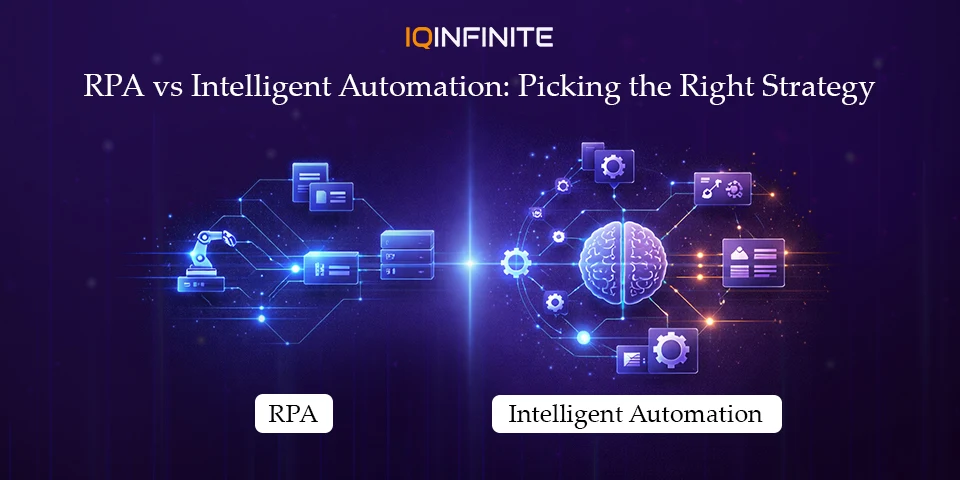
In today’s digital era, businesses are rapidly transforming how they operate and automation sits at the heart of this evolution. Whether you’re a startup or a global enterprise, choosing between Robotic Process Automation (RPA) and Intelligent Automation (IA) or knowing how to combine them can dramatically impact efficiency, cost and innovation.
Much like Xiaomi HyperOS, which integrates hardware, software and AI into a unified, intelligent ecosystem, modern enterprises are moving beyond isolated automation tools toward connected, adaptive automation strategies that work seamlessly across departments and systems.
In an age where even large financial institutions face unexpected system disruptions, such as a postbank störung, organizations are increasingly realizing the importance of resilient, automated processes that can respond quickly to operational challenges. Here’s a modern, trend-informed guide to help you shape a winning strategy.
What Are RPA and Intelligent Automation?
RPA - Robotic Process Automation
Intelligent Automation (IA)
But what does this mean for your business strategy?
RPA vs Intelligent Automation Head-to-Head
RPA is best suited for scenarios where:
- Tasks are highly structured and repetitive
- Business rules are clearly defined and stable
- Organizations need quick implementation (weeks to months)
- Data is fully structured (spreadsheets, databases, fixed formats)
- Automation is focused at a department or functional level
- Lower upfront investment is a priority
- Processes are complex and decision-driven
- Automation requires data interpretation and contextual understanding
- Systems must learn and adapt from patterns and historical data
- Both structured and unstructured data are involved (documents, emails, images, language)
- Organizations aim for enterprise-wide digital transformation
- Long-term business value outweighs higher initial costs
- Implementation timeline: RPA delivers faster results, while IA requires a longer rollout due to AI integration.
- Adaptability: RPA remains static unless reconfigured IA continuously improves through machine learning.
- Scalability: RPA scales within teams, whereas IA scales across the entire enterprise.
- Return on investment: RPA offers quick wins; IA delivers sustainable, intelligent growth.
Latest Trends Shaping the Automation Landscape
1. Hyperautomation Is the New Normal
2. AI-Powered Bots and Cognitive Skills
3. Agentic AI and Autonomous Operations
4. Cloud-Native & API-First Automation Platforms
5. Low-Code & Citizen Development
When to Choose RPA
- High-volume, repetitive operational tasks
- Clearly defined, rule-based processes
- Pressure to deliver quick ROI
- Budget constraints or early-stage AI maturity
When Intelligent Automation Becomes Essential
- Context-aware decision-making within workflows
- Processing of unstructured or semi-structured data (documents, emails, images, voice)
- End-to-end process orchestration across systems and teams
- Predictive insights, self-learning models and continuous optimization
Strategic Automation Roadmap for 2025 & Beyond
- 1. Start with RPA: Build momentum through quick wins by automating repetitive, rules-driven tasks. This establishes confidence, ROI and organizational buy-in.
- 2. Integrate AI Capabilities: Enhance automation with machine learning, NLP, OCR and analytics to manage exceptions, extract insights and improve accuracy.
- 3. Evolve into Intelligent Automation: Design workflows that learn, adapt and improve over time bridging systems, data and decisions seamlessly.
- 4. Embrace Hyperautomation: Orchestrate RPA, AI, process mining, low-code platforms and analytics to automate at an enterprise scale, not in silos.
- 5. Invest in Skills & Change Management: Technology alone doesn’t transform businesses. Upskill teams, redefine roles and foster a culture that embraces continuous automation-driven innovation.
Conclusion
Use RPA to drive speed, consistency and operational efficiency today.
Leverage Intelligent Automation to build adaptability, intelligence and lasting competitive advantage for tomorrow drawing inspiration from evolving AI frameworks and ecosystems such as Manus AI Meta, which highlight how context-aware intelligence can elevate automation beyond rule-based execution. When combined effectively, these approaches create a seamless operational flow, much like Le Shuttle, where multiple systems work in perfect coordination to deliver fast, reliable outcomes.
The most successful enterprises don’t choose between them they strategically combine both to future-proof their operations.