
The Evolution from Reactive Applications to Predictive Experiences
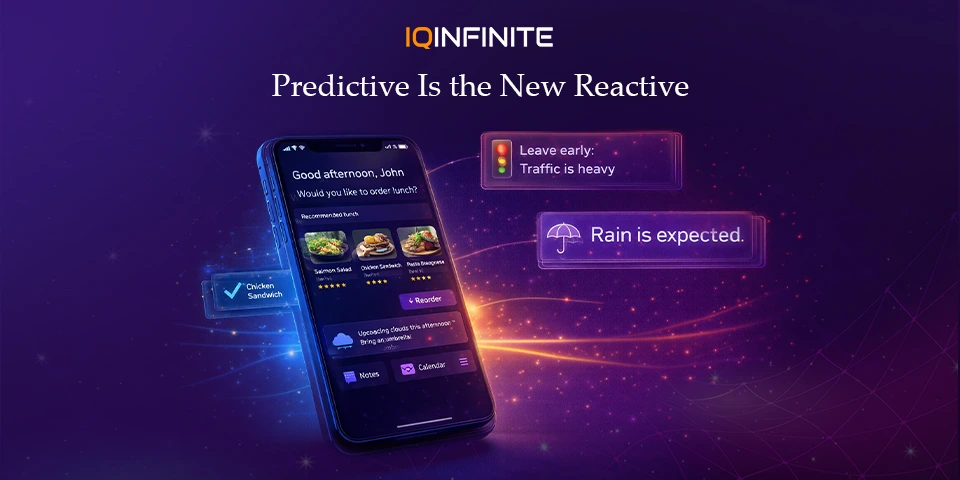
The digital world is no longer defined by how fast applications respond but by how well they anticipate.
We are witnessing a profound transformation: applications are evolving from reactive tools into predictive, intelligent experiences that understand intent, adapt in real time and act proactively much like the continuous innovation users experience through samsung galaxy updates, where systems evolve to anticipate user needs.
This shift represents more than a technological upgrade. It marks a new era in human computer interaction one where software doesn’t wait for commands but collaborates with users.
The Reactive Era: When Systems Only Responded
For decades, applications followed a simple pattern:
User acts → System reacts.
From clicking buttons to submitting forms, every interaction required explicit input. While effective at the time, reactive systems had clear limitations:
User acts → System reacts.
From clicking buttons to submitting forms, every interaction required explicit input. While effective at the time, reactive systems had clear limitations:
- Users carried the cognitive load
- Experiences were static and generic
- Context was ignored
- Personalization was minimal
As digital ecosystems scaled, this model began to break. Users demanded faster, smarter and more intuitive experiences and technology finally caught up.
The Inflection Point: Data, AI and Real-Time Intelligence
The shift from reactive applications to predictive, adaptive experiences did not happen overnight. It emerged from the convergence of three powerful technological forces each reinforcing the other and redefining how digital systems think and act.
1. The Explosion of Data
Every digital interaction clicks, swipes, scrolls, pauses, voice commands and sensor readings became a meaningful signal. Organizations now capture vast streams of behavioural, contextual and real-time data across devices and channels.
This data richness forms the raw intelligence layer, enabling systems to understand not just what users did, but how, when and why they did it.
This data richness forms the raw intelligence layer, enabling systems to understand not just what users did, but how, when and why they did it.
2. Advances in AI and Machine Learning
Modern AI has moved beyond descriptive analytics. Today’s machine learning models anticipate intent, predict outcomes and adapt continuously as new data arrives.
With techniques like deep learning, reinforcement learning and generative AI, systems no longer rely solely on historical patterns they evolve in real time, improving accuracy, relevance and decision-making with every interaction.
With techniques like deep learning, reinforcement learning and generative AI, systems no longer rely solely on historical patterns they evolve in real time, improving accuracy, relevance and decision-making with every interaction.
3. Real-Time Computing Power
Cloud-native architectures, edge computing and streaming analytics have removed the latency barrier. Data is now processed the moment it is generated, not hours or days later.
This real-time capability allows applications to respond instantly personalizing experiences, preventing issues before they occur and making decisions at the exact moment of need.
This real-time capability allows applications to respond instantly personalizing experiences, preventing issues before they occur and making decisions at the exact moment of need.
4. From Reactive Systems to Intelligent Partners
Together, these forces have transformed applications from passive responders into intelligent, proactive participants. Instead of waiting for users to act, modern systems anticipate needs, guide decisions and continuously optimize outcomes marking a true inflection point in digital experience design.
What Are Predictive Experiences?
Predictive experiences are intelligent systems that anticipate user needs before those needs are explicitly expressed delivering the right action, content or recommendation at precisely the right moment.
Rather than reacting to user input, these systems operate one step ahead.
Predictive experiences are fundamentally:
Rather than reacting to user input, these systems operate one step ahead.
Predictive experiences are fundamentally:
- Context-aware
- Data-driven
- Continuously learning
- Proactively adaptive
Traditional applications ask, “What does the user want right now?”
Predictive systems ask a more powerful question:
“What will the user need next and how can we help before friction appears?”
Predictive systems ask a more powerful question:
“What will the user need next and how can we help before friction appears?”
Key Technologies Powering Predictive Experiences
Artificial Intelligence & Machine Learning
AI and ML form the intelligence core of predictive systems. By identifying behavioural patterns, detecting intent and forecasting outcomes, these models enable applications to personalize journeys dynamically and at scale.
Common examples include:
Common examples include:
- Workflow recommendations in enterprise software
- Intelligent content suggestions on streaming and media platforms
- Predictive maintenance alerts in IoT and industrial systems
Modern ML models continuously improve, refining predictions with every interaction.
Predictive Analytics & Behavioural Modelling
Predictive analytics combines historical data with real-time signals to move beyond insight toward foresight.
These capabilities allow applications to:
These capabilities allow applications to:
- Forecast user behaviour
- Anticipate churn before it happens
- Optimize conversion paths
- Surface risks and opportunities early
The result is decision-making that is preventative, not reactive.
Generative AI & Large Language Models
Generative AI adds a creative and conversational layer to predictive systems.
Beyond predicting outcomes, GenAI can generate personalized content, adaptive UI copy, contextual explanations and human-like interactions. Intelligent assistants powered by large language models make predictive experiences feel natural, intuitive and deeply personalized without sacrificing scale.
This is where prediction meets empathy.
Beyond predicting outcomes, GenAI can generate personalized content, adaptive UI copy, contextual explanations and human-like interactions. Intelligent assistants powered by large language models make predictive experiences feel natural, intuitive and deeply personalized without sacrificing scale.
This is where prediction meets empathy.
Context Awareness & Ambient Intelligence
Modern predictive systems incorporate rich contextual signals, including:
- Location
- Time
- Device type
- Usage history
- Environmental and situational data
This enables ambient intelligence experiences that adapt invisibly in the background, without forcing users to constantly configure preferences or make repetitive choices.
The system understands. The user simply acts.
The system understands. The user simply acts.
Business Impact: Why Predictive Experiences Matter
Organizations that adopt predictive experiences gain measurable competitive advantages:
- Higher engagement and retention
- Faster, smarter decision-making
- Improved conversion and efficiency
- Stronger customer trust and loyalty
- Deeper behavioural and operational insights
Predictive systems don’t just enhance user experience they redefine how value is created.
Ethics, Trust & Responsible Intelligence
As systems become more predictive, responsibility becomes non-negotiable.
Critical principles include:
Critical principles include:
- Privacy and consent by design
- Transparency in predictions and recommendations
- Bias detection and mitigation
- User control and explainability
The objective is not to remove human choice but to augment it responsibly.
The Future: From Predictive to Proactive Ecosystems
We are entering an era where applications:
- Anticipate goals, not just actions
- Collaborate with users rather than command them
- Learn continuously from evolving context
- Act as intelligent partners, not passive tools
The evolution from reactive applications to predictive experiences is no longer optional it is inevitable.
Conclusion
Predictive experiences represent a fundamental shift in digital design and engineering.
They mark the end of static interactions and the rise of intelligent, adaptive, human-centric systems capable of responding effectively even during unexpected events such as a canned tuna recall, when timely, anticipatory information matters most.
In the years ahead, the most successful products won’t be the fastest.
They’ll be the ones that understand users before users even ask.
They mark the end of static interactions and the rise of intelligent, adaptive, human-centric systems capable of responding effectively even during unexpected events such as a canned tuna recall, when timely, anticipatory information matters most.
In the years ahead, the most successful products won’t be the fastest.
They’ll be the ones that understand users before users even ask.