
Privacy-First Mobile App Development: How On-Device AI Is Transforming Apps
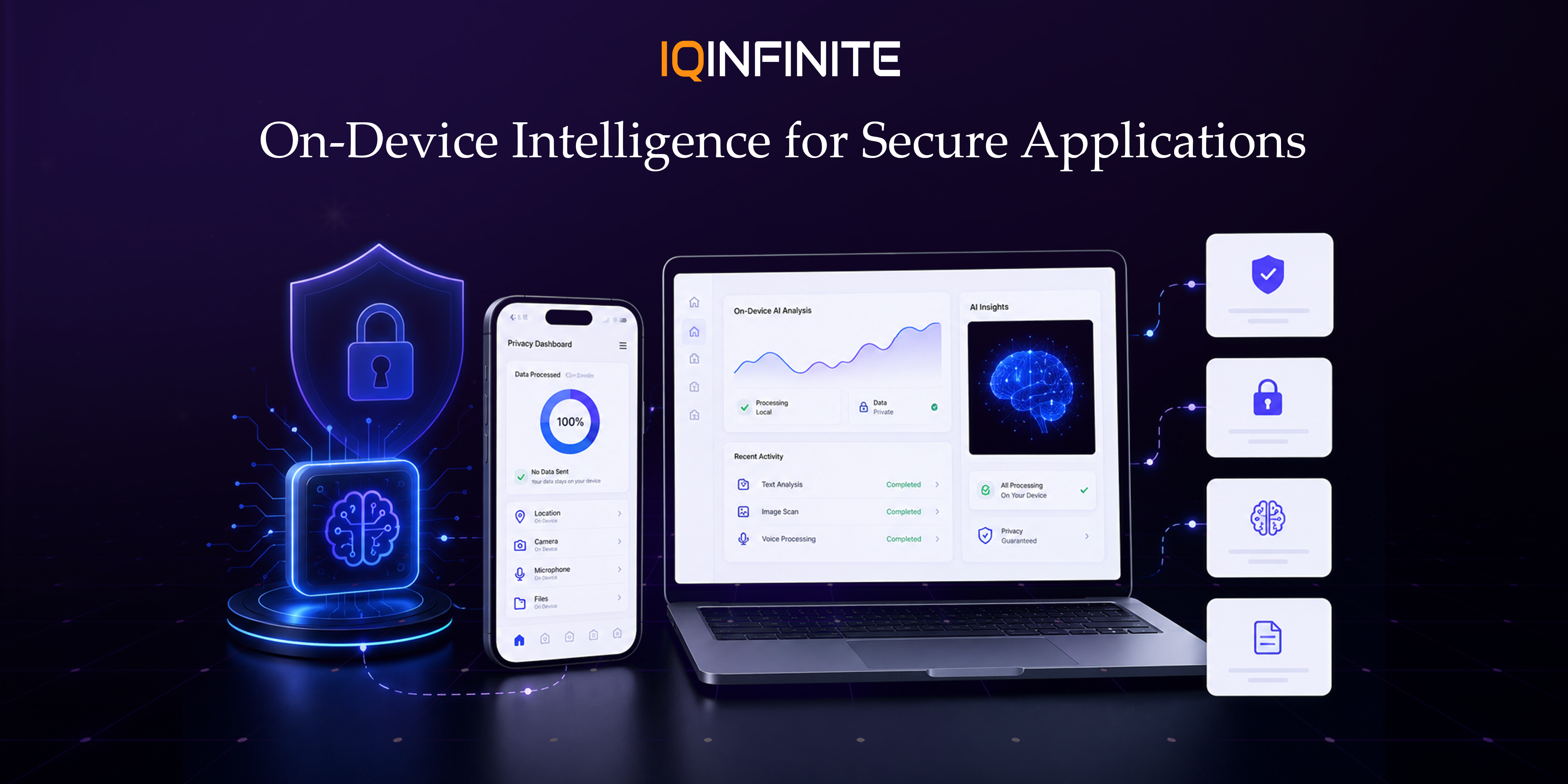
As artificial intelligence becomes a standard feature in modern mobile applications, users are becoming increasingly concerned about how their personal data is collected, processed and stored. In 2026, privacy-first AI and on-device AI for mobile apps have become major technology trends, driven by stricter global privacy regulations, user expectations and the rapid adoption of intelligent edge computing. Businesses are now embracing secure mobile app development practices that prioritize user privacy while delivering highly personalized AI experiences.
Unlike traditional cloud-based AI models that send user data to remote servers for processing, on-device AI performs machine learning tasks directly on smartphones, tablets and edge devices. This approach delivers faster performance, lower latency, enhanced security and significantly improved privacy.
Businesses investing in AI-powered mobile applications are now prioritizing privacy-by-design architecture, enabling intelligent experiences without compromising sensitive customer information.
What Is Privacy-First Mobile App Development?
By combining privacy-preserving machine learning techniques with modern security practices, developers can build AI-powered applications that protect sensitive user information while maintaining high performance and regulatory compliance.
Instead of collecting excessive personal information, modern applications follow principles such as:
- Data minimization
- Local data processing
- User-controlled permissions
- End-to-end encryption
- Transparent AI decision making
- Secure authentication
- Compliance with international privacy regulations
What Is On-Device AI?
Modern chipsets now include dedicated AI processors known as NPUs (Neural Processing Units), making it possible to run sophisticated machine learning models efficiently.
Popular mobile AI frameworks include:
- Apple Core ML
- Google ML Kit
- TensorFlow Lite
- ONNX Runtime Mobile
- Qualcomm AI Engine
- MediaTek NeuroPilot
Key Benefits of Privacy-First Mobile Apps
1. Enhanced User Trust
Benefits include:
- Increased user trust and confidence
- Higher customer retention rates
- Stronger brand loyalty
- Improved user satisfaction and engagement
2. Faster Performance with On-Device AI
Common features powered by on-device AI include:
- Face recognition
- Voice assistants
- Camera enhancements
- Smart search
- Image classification
- Real-time language translation
3. Stronger Data Security
Privacy-first mobile apps help protect against:
- Data breaches
- Unauthorized access
- Cloud security vulnerabilities
- Third-party data misuse
4. Lower Latency for Real-Time AI Experiences
Applications that benefit from low-latency AI include:
- Augmented Reality (AR)
- Live object detection
- GPS navigation
- Instant language translation
- Voice transcription
- Real-time camera intelligence
5. Easier Regulatory Compliance
This helps organizations:
- Simplify compliance with privacy regulations
- Reduce legal and operational risks
- Build customer confidence through transparent data practices
- Prepare for evolving global privacy standards
Latest Mobile AI Technologies Shaping 2026
Edge AI
Small Language Models (SLMs)
AI Agents on Mobile
Multimodal AI
- Voice
- Images
- Text
- Video
Federated Learning
AI-Powered Personalization
Best Practices for Building Privacy-First Mobile Apps
- Implement Privacy by Design
- Process sensitive information locally whenever possible
- Encrypt all stored user data
- Minimize permission requests
- Offer transparent privacy controls
- Regularly update AI models
- Secure APIs with OAuth and token-based authentication
- Enable biometric authentication
- Perform continuous security testing
- Adopt Zero Trust security architecture
Challenges Developers Should Consider
- Device hardware limitations
- AI model optimization
- Battery consumption
- Model compression
- Cross-platform compatibility
- Secure model deployment
- AI model updates
- Storage limitations
Future of Privacy-First Mobile Development
- Edge AI
- Generative AI
- AI Agents
- Small Language Models
- Federated Learning
- Differential Privacy
- Confidential Computing
- Secure Enclave Processing
- Zero Trust Architecture
- Context-Aware Intelligence
Privacy-first AI is expected to become the default architecture for enterprise mobile applications over the coming years.
Why Businesses Should Invest in Privacy-First Mobile Apps
- Stronger customer trust
- Higher app engagement
- Faster application performance
- Lower cloud infrastructure costs
- Enhanced cybersecurity
- Easier regulatory compliance
- Competitive market differentiation
- Future-ready AI capabilities
Conclusion
As the future of on-device AI continues to evolve, businesses that embrace privacy-preserving machine learning and secure mobile app development will be better positioned to comply with global regulations, strengthen customer trust and deliver next-generation digital experiences. Investing in privacy-first mobile applications today is a strategic step toward building secure, intelligent and future-ready AI-powered products.