
Platform Engineering 2026: Unlock DevOps Speed with IDP Mastery
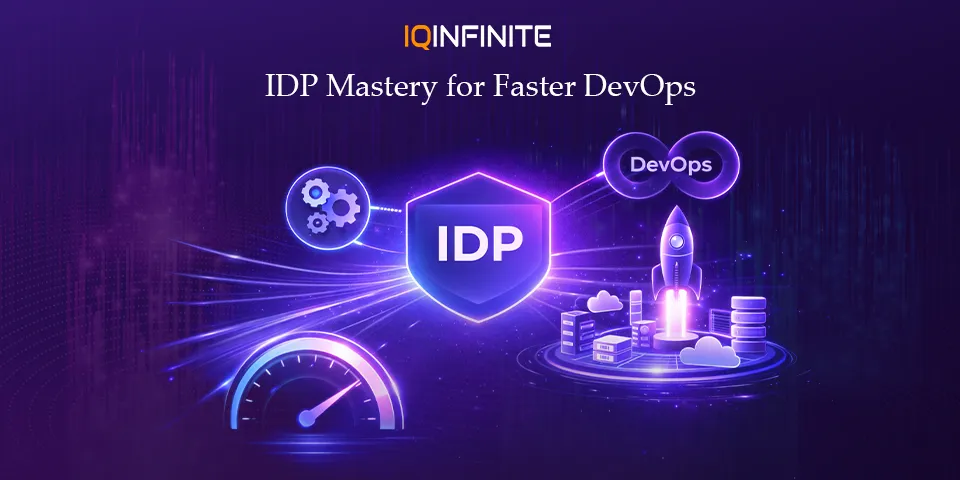
In 2026, Platform Engineering isn’t a luxury it’s a strategic imperative. As DevOps practices mature, organizations face scaling challenges that traditional CI/CD and automation cannot solve alone. Enter Internal Developer Platforms (IDPs): the new backbone of modern software delivery that finally bridges the gap between developer velocity and operational reliability.
Amid rapid advancements frequently highlighted in artificial intelligence news, enterprises are rethinking how infrastructure, tooling and developer experiences evolve to support AI-driven workloads.
What Is Platform Engineering?
Before diving deeper, it’s important to answer the growing industry question: what is platform engineering?
Platform engineering is the discipline of designing and maintaining Internal Developer Platforms that provide self-service infrastructure, standardized workflows, automation and governance for engineering teams. It transforms infrastructure into a product built, maintained and improved with developer experience in mind.
Platform engineering is the discipline of designing and maintaining Internal Developer Platforms that provide self-service infrastructure, standardized workflows, automation and governance for engineering teams. It transforms infrastructure into a product built, maintained and improved with developer experience in mind.
Why Platform Engineering Is Exploding in 2026
Platform Engineering has moved from niche experimentation to enterprise-grade adoption. According to industry forecasts:
- 80% of large software organizations will have dedicated platform teams by 2026.
- High-maturity platform teams report up to 40-50% reduction in developer cognitive load.
These numbers highlight the measurable benefits of platform engineering:
- Reduced cognitive load
- Faster deployment cycles
- Higher infrastructure consistency
- Improved security posture
- Lower operational friction
As systems grow in complexity, self-service and standardization outperform manual orchestration every time.
What an IDP Really Is
An Internal Developer Platform (IDP) is more than a dashboard or tool collection it’s the abstraction layer that delivers infrastructure, pipelines, security and policies as reusable products.
What an IDP is:
What an IDP is:
- A self-service portal for provisioning environments and services
- Golden paths guiding best-practice workflows
- Declarative automation that hides complexity
- Built-in guardrails for security and compliance
What an IDP isn’t:
- A replacement for DevOps teams
- A single CI/CD tool
- A Kubernetes cluster alone
- A dashboard on top of existing chaos
Instead, an IDP makes developers independent and DevOps teams strategic.
The IDP Maturity Model
Not all platforms are equal. Organizations often evolve through an IDP maturity model, typically progressing through stages:
- Tool Aggregation Stage - Basic CI/CD and shared tooling
- Standardization Stage - Golden paths and reusable templates
- Self-Service Stage - Developer portals with automated provisioning
- Productized Platform Stage - Full lifecycle ownership, metrics and DevEx optimization
- AI-Augmented Stage - Intelligent automation, predictive scaling, autonomous recovery
Understanding maturity levels helps organizations define measurable growth benchmarks.
DevOps Speed & Developer Experience
The core value of Platform Engineering isn’t automation alone it’s velocity and experience.
- Self-service provisioning reduces setup times from days to hours.
- Standardized pipelines increase deployment frequency dramatically.
- Developers spend less time navigating tooling complexity.
- Proactive monitoring and disruption tracking using services like Downdetector help teams detect outages quickly and maintain operational reliability.
In 2026, Developer Experience (DevEx) is treated as a strategic KPI.
AI Is Now Part of the Platform
This year’s biggest evolution is AI speaking fluent infrastructure:
- Natural language provisioning through GenAI interfaces
- Intelligent cost-optimization engines
- Autonomous deployment orchestration and recovery
The platform no longer just executes commands it assists, recommends and predicts.
Modern Architecture: Kubernetes, Serverless & GitOps
IDPs don’t replace core technologies they orchestrate them intelligently:
- GitOps ensures versioned and reproducible infrastructure
- Kubernetes and serverless provide scalable cloud-native execution
- Declarative configuration becomes universal
This supports a consistent platform engineering lifecycle, from design and provisioning to deployment, monitoring, optimization and continuous improvement.
From DevOps Bottlenecks to Platform Efficiency
Traditional DevOps teams often become ticket factories. IDPs eliminate bottlenecks by:
- Standardizing toolchains
- Automating repetitive tasks
- Embedding security by default
- Reducing human error
This is not about replacing people it’s about multiplying impact.
The Real Impact of Mastering an IDP
Organizations that execute a clear IDP implementation roadmap see measurable gains:
- 40-50% reduction in cognitive overload
- Environment setup reduced from days to hours
- Multiple deployments per day
- Fewer broken releases due to standardized workflows
Clear roadmaps typically include:
- Assess current tooling and DevEx friction
- Define golden paths
- Build self-service infrastructure
- Embed security and compliance
- Measure, iterate and scale
Cultural & Organizational Transformation
The biggest transformation is cultural:
- Platform teams adopt product-thinking
- Developers focus on capabilities instead of configuration
- Operations shift from reactive to proactive
Security awareness also becomes embedded in platform workflows. Even foundational topics like what is phishing influence how guardrails, access policies and automated compliance mechanisms are built into the platform.
Conclusion
In 2026, Platform Engineering and IDP mastery represent the intersection of DevOps evolution, developer autonomy and AI-augmented delivery.
Organizations that understand what platform engineering is, implement a structured platform engineering lifecycle, adopt an IDP maturity model and follow a clear IDP implementation roadmap unlock predictable, secure and scalable innovation.
Platforms don’t just deliver infrastructure they deliver velocity at scale.
Organizations that understand what platform engineering is, implement a structured platform engineering lifecycle, adopt an IDP maturity model and follow a clear IDP implementation roadmap unlock predictable, secure and scalable innovation.
Platforms don’t just deliver infrastructure they deliver velocity at scale.