
How Mobile Apps Will Work Alongside AI Browsers Instead of Competing With Them
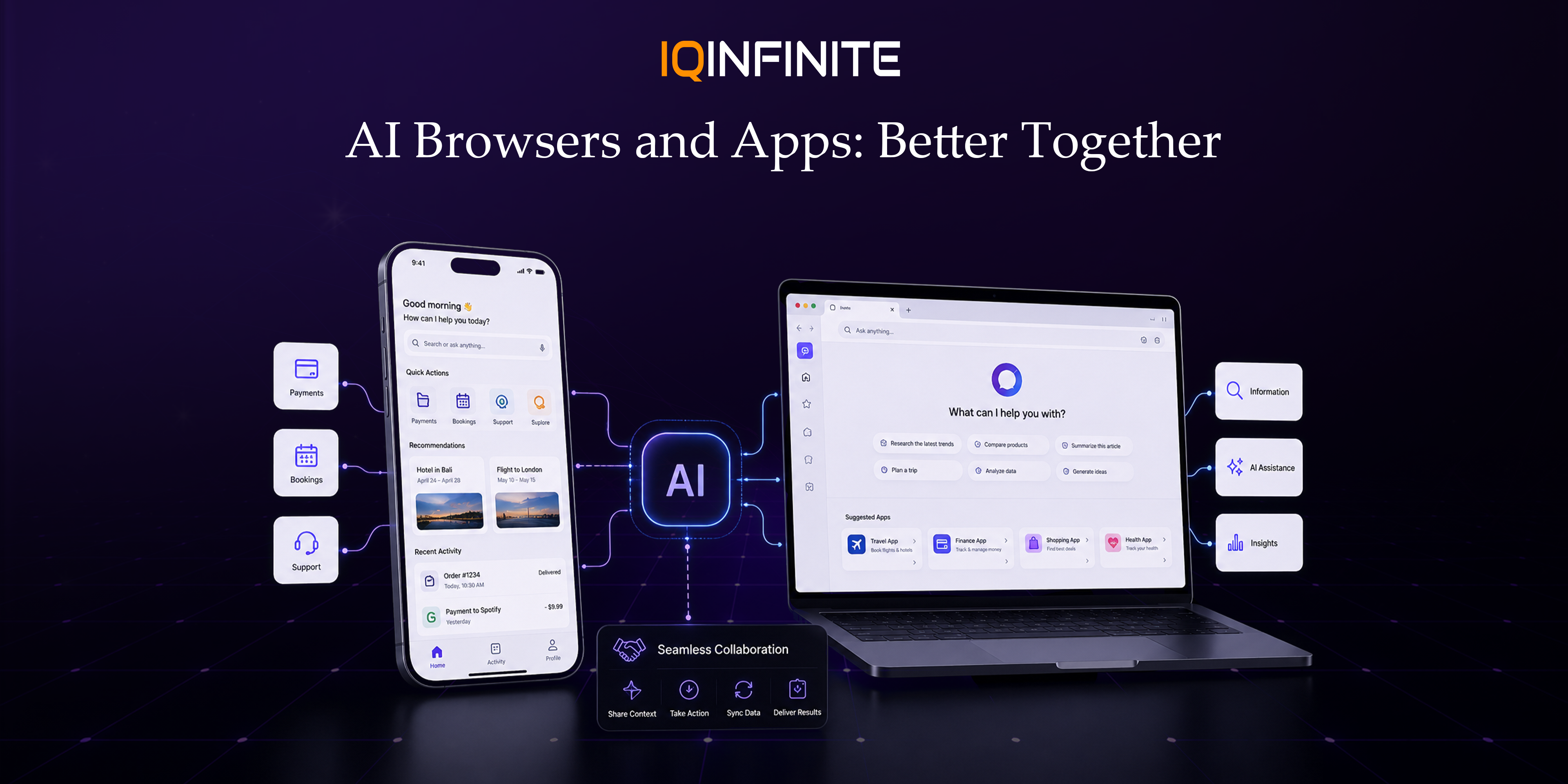
The way people interact with the internet is changing rapidly. For decades, users searched for information, visited websites, downloaded mobile apps and completed tasks manually. Today, the emergence of AI browsers, Google AI Mode, Perplexity browser and advanced AI search engine technologies is transforming that experience. Instead of opening multiple websites or switching between different applications, users can simply ask an AI assistant to complete tasks on their behalf.
This shift has led many businesses to wonder: Will AI browsers replace mobile apps?
The answer is no.
Rather than replacing apps, AI browsers are creating a new ecosystem where intelligent assistants and mobile applications work together. AI browsers act as orchestrators that understand user intent, while mobile apps continue to provide secure transactions, personalized experiences, device capabilities and business-specific functionality.
For businesses investing in Mobile App Development and AI app development, the future is no longer about competing with AI it is about making apps AI-ready so they become an essential part of the AI-driven digital ecosystem.
What Are AI Browsers?
Imagine saying:
"Book me the cheapest flight to London next weekend, reserve a hotel near the conference venue and add the itinerary to my calendar."
Instead of opening ten different tabs, the AI browser handles the research, comparisons and bookings while interacting with various platforms behind the scenes.
Some emerging AI browsing experiences include:
- AI-powered search assistants
- Autonomous web agents
- Conversational browsing interfaces
- Multi-step task automation
- Personalized digital assistants
Why Mobile Apps Are Still Essential
Modern mobile apps offer:
- Secure authentication and identity management
- Payment processing
- Device hardware integration
- Offline functionality
- Personalized dashboards
- Push notifications
- High-performance user experiences
- Access to camera, GPS, Bluetooth, NFC and biometric authentication
Rather than eliminating apps, AI browsers simply become another entry point into them.
The New Role of Mobile Applications
Instead of expecting users to navigate every screen manually, apps will expose their services to AI assistants through secure APIs and AI-friendly interfaces.
Future-ready mobile apps will provide:
- AI-accessible services
- Structured data for AI understanding
- Intelligent APIs
- Secure transaction capabilities
- Context-aware personalization
- Real-time synchronization
- Cross-platform integration
How AI Browsers and Mobile Apps Will Work Together
1. AI Discovers the Right Service
Example:
"Book my annual health checkup."
The AI browser identifies nearby hospitals or clinics, compares available appointments, reviews and pricing, then recommends the most suitable option.
2. AI Selects the Best Platform
- Customer reviews and ratings
- Pricing and special offers
- Real-time availability
- User preferences
- Previous interactions
- Current location
- Loyalty programs and memberships
To remain visible in these AI-powered experiences, organizations are increasingly adopting answer engine optimization (AEO) strategies that help AI systems understand and recommend their services more effectively.
3. Mobile Apps Handle Secure Actions
- Secure payments
- Identity verification
- Digital signatures
- Access to medical records
- Banking and financial transactions
- Business approvals and workflows
4. AI Continuously Learns User Preferences
- Favourite brands
- Shopping patterns
- Travel preferences
- Preferred payment methods
- Appointment history
- Frequently used service providers
Technologies Making This Possible
AI Agents: Autonomous AI systems can understand goals, plan tasks, interact with multiple services and complete workflows with minimal user input.
Model Context Protocol (MCP): MCP allows AI assistants to securely access external tools, business systems, databases and applications, making interactions more reliable and context aware.
API-First Architecture: Modern applications expose secure APIs that enable AI browsers to retrieve information and trigger actions without compromising security.
Retrieval-Augmented Generation (RAG): RAG allows AI systems to access real-time business knowledge instead of relying only on pre-trained information, improving accuracy and relevance.
On-Device AI: Modern smartphones increasingly process AI tasks locally, delivering faster responses, improved privacy and reduced dependence on cloud infrastructure.
Benefits for Businesses
Better Customer Experience: Customers complete complex tasks using simple conversations instead of navigating multiple screens.
Higher Conversion Rates: AI browsers can guide users directly to purchase or booking flows, reducing friction and increasing conversions.
Increased Customer Retention: Personalized AI experiences encourage repeat engagement by understanding user preferences and offering timely recommendations.
Smarter Automation: AI automates repetitive tasks such as scheduling, reminders, order tracking and customer support, improving operational efficiency.
Future-Proof Digital Strategy: Organizations with AI-ready mobile applications will be better positioned as conversational interfaces become mainstream.
Industries That Will Benefit the Most
- Healthcare: AI-assisted appointment scheduling, patient engagement and medical guidance.
- E-commerce: Intelligent shopping, product discovery and personalized recommendations.
- Banking & FinTech: Secure financial transactions, budgeting assistance and fraud detection.
- Travel & Hospitality: AI-powered itinerary planning, bookings and travel management.
- Education: Personalized learning experiences and AI tutoring.
- Logistics: Automated shipment tracking, route optimization and customer communication.
- Enterprise Software: AI-assisted workflows, approvals, reporting and employee productivity.
Preparing Your Mobile App for the AI Era
Focus on:
- Designing API-first architectures.
- Implementing secure authentication and authorization.
- Structuring data for AI accessibility.
- Integrating AI assistants into customer workflows.
- Supporting conversational interfaces.
- Leveraging cloud-native infrastructure.
- Enhancing privacy and data security.
- Building scalable AI integrations for future growth.
The Future of AI Browsers and Mobile Apps
AI browsers will become intelligent digital assistants that understand user intent, discover services, compare options and automate workflows. Mobile apps will remain the trusted environment for secure transactions, personalized experiences and advanced device capabilities.
Businesses that embrace this collaborative approach will deliver faster, smarter and more intuitive digital experiences, strengthening customer relationships and driving long-term growth.
Conclusion
For organizations investing in AI-powered Mobile App Development, success will depend on building applications that are intelligent, API-driven and ready to collaborate with AI ecosystems. By preparing today, businesses can ensure their apps remain relevant, accessible and indispensable in the next generation of digital experiences.