
How to Integrate Generative AI into Mobile Applications
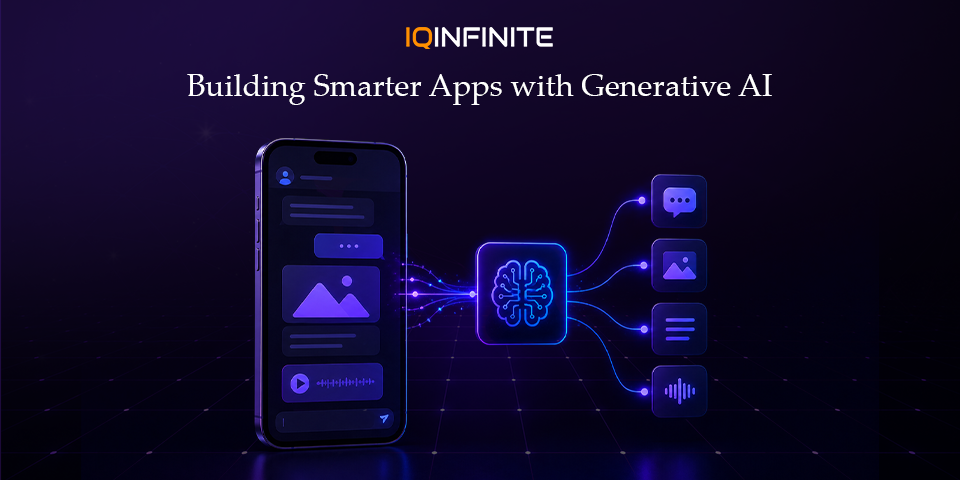
The mobile app industry is undergoing a massive transformation, and Generative AI is at the center of this revolution. From AI-powered chatbots and personalized recommendations to intelligent content creation and voice assistants, businesses are rapidly investing in generative AI mobile apps to enhance user engagement and automate complex tasks.
As AI technologies continue to evolve in 2026, mobile applications are no longer limited to performing predefined actions. They can now understand natural language, generate content, analyze images, create personalized experiences and assist users in real time. Companies across industries such as healthcare, fintech, e-commerce, education and entertainment are leveraging generative AI app development to deliver smarter and more interactive mobile experiences.
What is Generative AI?
Popular Generative AI technologies include Large Language Models (LLMs), multimodal AI models, image generation systems, speech synthesis engines and AI-powered recommendation platforms.
These technologies enable mobile applications to provide human-like conversations, generate personalized content, automate customer support, summarize information and create engaging user experiences.
Why Businesses Are Integrating Generative AI into Mobile Apps
Key benefits of integrating Generative AI into mobile applications include:
- Enhanced user engagement through personalized interactions
- Improved customer support with AI chat assistants
- Automated content creation and summarization
- Increased productivity through intelligent workflows
- Real-time language translation and voice interaction
- Advanced image and video generation capabilities
- Better customer retention through hyper-personalization
- Reduced operational costs through automation
Popular Use Cases of Generative AI in Mobile Applications
AI Chatbots and Virtual Assistants
Industries benefiting from AI chatbots include:
- E-commerce
- Banking and finance
- Healthcare
- Travel and hospitality
- Education
- Real estate
Personalized Content Generation
Examples include:
- Personalized product descriptions
- Dynamic marketing messages
- Custom learning materials
- Personalized fitness plans
- AI-generated social media captions
- Smart email drafting
AI-Powered Image and Video Generation
Popular use cases include:
- AI avatar generation
- Photo enhancement
- Marketing creative generation
- Product visualization
- Social media content creation
- Virtual try-on experiences
Voice AI and Speech Recognition
Generative AI can:
- Convert speech to text
- Generate natural-sounding speech
- Support multilingual communication
- Enable hands-free interactions
- Improve accessibility
AI-Powered Coding and Productivity Apps
These capabilities help users:
- Generate code snippets
- Automate repetitive tasks
- Summarize documents
- Generate reports
- Manage workflows efficiently
Steps to Integrate Generative AI into Mobile Applications
Define the Business Objective
Ask questions such as:
- Do users need conversational support?
- Is content generation required?
- Should the app analyse images or videos?
- Are personalized recommendations necessary?
Choose the Right AI Model
Common categories include:
- Text generation models
- Image generation models
- Speech generation models
- Multimodal AI models
- Recommendation engines
Select an AI Integration Approach
Cloud-Based AI APIs
- Faster implementation
- Lower infrastructure costs
- Continuous model improvements
- Easy scalability
On-Device AI Processing
- Better privacy
- Reduced latency
- Offline functionality
- Improved performance
Design an AI-First User Experience
Best practices include:
- Clear AI interactions
- Context-aware responses
- Fast response times
- Transparent AI-generated content
- User feedback mechanisms
Implement Security and Privacy Controls
Organizations should focus on:
- Data encryption
- Secure API communication
- Privacy compliance
- User consent management
- AI governance frameworks
- Responsible AI practices
Optimize AI Performance
Optimization strategies include:
- Response caching
- Prompt engineering
- Model fine-tuning
- Efficient API management
- Edge AI deployment
- Latency reduction techniques
Emerging Trends in Generative AI for Mobile Apps in 2026
Multimodal AI Experiences
AI Agents and Autonomous Workflows
Hyper-Personalization
Edge AI and On-Device Intelligence
Responsible AI and Governance
Challenges of Generative AI Integration
- Data privacy concerns
- AI hallucinations and inaccurate outputs
- High infrastructure costs
- Model scalability issues
- Regulatory compliance requirements
- Performance optimization complexities
The Future of AI-Powered Mobile Applications
As technologies such as AI agents, multimodal models, edge computing, and personalized AI continue to mature, businesses that adopt AI-driven mobile app development strategies today will be better positioned to lead the next wave of digital innovation.
Conclusion
As the mobile ecosystem continues to evolve, embracing Generative AI, AI Agents, Multimodal AI, Hyper-Personalization, Edge AI and Responsible AI practices will be essential for organizations looking to remain competitive in the rapidly changing digital landscape. Businesses that invest in AI-powered mobile applications today are setting the foundation for the next generation of intelligent customer experiences.