
How GitOps Became the Backbone of Cloud-Native DevOps
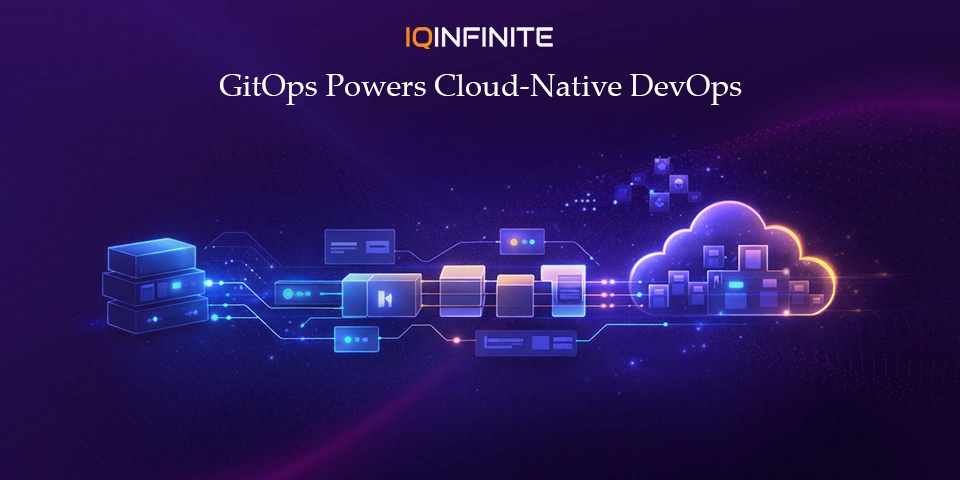
In the rapidly evolving world of cloud-native development, GitOps has emerged as more than just a buzzword it’s now the foundation of modern DevOps practices. Initially conceived to simplify Kubernetes deployments, GitOps has grown into a powerful methodology that unifies development, operations and infrastructure automation, helping organizations respond faster to changing market demands while maintaining consistency, security and operational control.
What Is GitOps? A Simple Primer
GitOps is an operational model that uses Git as the single source of truth for application code, infrastructure and deployment configurations. Instead of manually changing production environments, teams define the desired state of systems declaratively in Git.
Automated controllers like Argo CD and Flux continuously monitor these repositories and reconcile the live environment to match what’s defined in Git. Any drift is automatically detected and corrected.
By combining declarative configuration, version control and automated reconciliation, GitOps enables faster deployments, stronger security, built-in auditability and reliable self-healing systems making it a cornerstone of modern cloud-native operations.
Automated controllers like Argo CD and Flux continuously monitor these repositories and reconcile the live environment to match what’s defined in Git. Any drift is automatically detected and corrected.
By combining declarative configuration, version control and automated reconciliation, GitOps enables faster deployments, stronger security, built-in auditability and reliable self-healing systems making it a cornerstone of modern cloud-native operations.
Why GitOps Matters in Cloud-Native DevOps
1. Git at the Center of CI/CD
Traditional CI/CD pipelines rely heavily on scripts and manual interventions, often disconnected from the actual runtime state of infrastructure. GitOps flips this model by turning Git into the pipeline itself. Every change application code, infrastructure or configuration flow through Git and triggers automated deployments.
This approach enables:
This approach enables:
- Automatic deployments from a simple Git commit
- Instant rollbacks using Git history
- End-to-end traceability for audits and compliance
- Reduced human error and configuration drift
These capabilities are critical in highly scalable, distributed cloud-native environments.
2. Consistency and Standardization Across Teams
Cloud-native platforms, especially Kubernetes, introduce complexity across clusters, namespaces and services. GitOps brings order by establishing Git as a shared contract between development and operations.
With GitOps, teams gain:
With GitOps, teams gain:
- Unified workflows for developers and operators
- Standardized configurations across all environments
- Auditable change history with built-in approvals
The result is clarity, consistency and confidence in what’s running everywhere.
3. Automation and Self-Healing by Design
A defining strength of GitOps is continuous reconciliation. Tools like Argo CD and Flux constantly compare the live environment with the desired state in Git and automatically correct any drift.
This self-healing automation is essential for:
This self-healing automation is essential for:
- Large Kubernetes fleets
- Multi-cloud architectures
- Hybrid and edge deployments
GitOps doesn’t just deploy applications it continuously ensures correctness and reliability.
GitOps Trends Shaping 2025 and Beyond
AI-Powered Deployment Validation
GitOps is evolving from reactive automation to predictive operations. AI and ML are being integrated into GitOps workflows to assess deployment risk, detect anomalies early and optimize rollout strategies before issues reach production. This shift strengthens reliability, reduces incidents and enables smarter decision-making at scale.
DevSecOps Meets GitOps
Security is no longer an afterthought it’s built directly into Git workflows. Modern GitOps pipelines embed policy-as-code, vulnerability scanning and compliance checks before changes are merged. The result is automated, consistent enforcement of security standards without slowing delivery.
Enterprise Standardization
By 2025, GitOps has moved beyond experimentation into enterprise standard practice. Open-source foundations and cloud-native ecosystems are driving standardized frameworks, interoperable tooling and reference architectures for multi-cloud and hybrid environments making GitOps predictable and scalable for large organizations.
GitOps Beyond Kubernetes
While Kubernetes sparked GitOps adoption, its scope is rapidly expanding to include:
- Serverless platforms
- Edge and IoT environments
- Infrastructure beyond Kubernetes
- Unified change management across diverse systems
GitOps is becoming the universal control plane for cloud-native operations.
Top GitOps Tools Powering Modern DevOps
Argo CD excels at real-time synchronization between Git and Kubernetes clusters, making it ideal for managing complex, multi-cluster environments with strong visibility and control.
Flux CD focuses on continuous reconciliation and Git-native automation, ensuring that the desired state defined in Git is always enforced across environments.
Jenkins X provides an end-to-end, GitOps-driven CI/CD experience, automating everything from code commits to production deployments in cloud-native setups.
Crossplane enables teams to provision and manage cloud infrastructure using Git, treating infrastructure components as Kubernetes resources for true infrastructure-as-code.
Dagger stands out for its portable automation capabilities, allowing consistent pipelines and workflows to run seamlessly across local, CI and production environments.
Together, these tools form the backbone of scalable, production-grade GitOps platforms, empowering teams to deliver faster, safer and more reliable software.
Flux CD focuses on continuous reconciliation and Git-native automation, ensuring that the desired state defined in Git is always enforced across environments.
Jenkins X provides an end-to-end, GitOps-driven CI/CD experience, automating everything from code commits to production deployments in cloud-native setups.
Crossplane enables teams to provision and manage cloud infrastructure using Git, treating infrastructure components as Kubernetes resources for true infrastructure-as-code.
Dagger stands out for its portable automation capabilities, allowing consistent pipelines and workflows to run seamlessly across local, CI and production environments.
Together, these tools form the backbone of scalable, production-grade GitOps platforms, empowering teams to deliver faster, safer and more reliable software.
Challenges and Best Practices in GitOps Adoption
Common Challenges
Despite its advantages, adopting GitOps comes with a few notable challenges:
- Steep learning curve: Teams must develop strong Git expertise and shift toward a declarative, infrastructure-as-code mindset.
- Operational complexity at scale: Managing large Git repositories, multiple environments and numerous Kubernetes clusters can become complex without clear governance.
- Security and access management risks: Handling secrets, credentials and permissions requires careful planning to avoid exposure or misconfiguration.
GitOps Best Practices
To overcome these challenges and unlock the full potential of GitOps, organizations should follow these proven best practices:
- Define clear Git branching strategies: Use well-structured branches for features, environments and releases to maintain clean promotion paths and auditability.
- Implement secure secret management: Integrate tools like HashiCorp Vault or external secret stores to keep sensitive data out of Git repositories.
- Enforce automated testing and policy checks: Validate configuration changes through CI pipelines, including security scans, compliance checks and policy enforcement before deployment.
- Enable continuous monitoring and drift detection: Actively monitor runtime environments and automatically detect and correct configuration drift to maintain the desired state.
These practices help ensure GitOps implementations remain secure, reliable and scalable as systems grow.
Conclusion
GitOps has evolved from a promising concept into a foundational pillar of cloud-native DevOps. By placing Git at the center of deployment, configuration and policy management, organizations achieve greater automation, consistency and security at scale creating transparent, auditable systems that help prevent configuration drift and hidden failures from spreading through infrastructure like a killer fungus in unmanaged environments.
As modern infrastructure expands across multi-cloud, edge computing and AI-driven environments, GitOps will continue to shape how systems are built and operated particularly for digital-native organizations such as Octopus Energy, where rapid innovation, reliability and scalable cloud platforms are critical to business success.
For organizations embracing cloud-native architectures, adopting GitOps is no longer optional it is essential for sustainable, scalable and secure operations.
As modern infrastructure expands across multi-cloud, edge computing and AI-driven environments, GitOps will continue to shape how systems are built and operated particularly for digital-native organizations such as Octopus Energy, where rapid innovation, reliability and scalable cloud platforms are critical to business success.
For organizations embracing cloud-native architectures, adopting GitOps is no longer optional it is essential for sustainable, scalable and secure operations.