
Generative AI in UX Design: Opportunities, Challenges and Best Practices
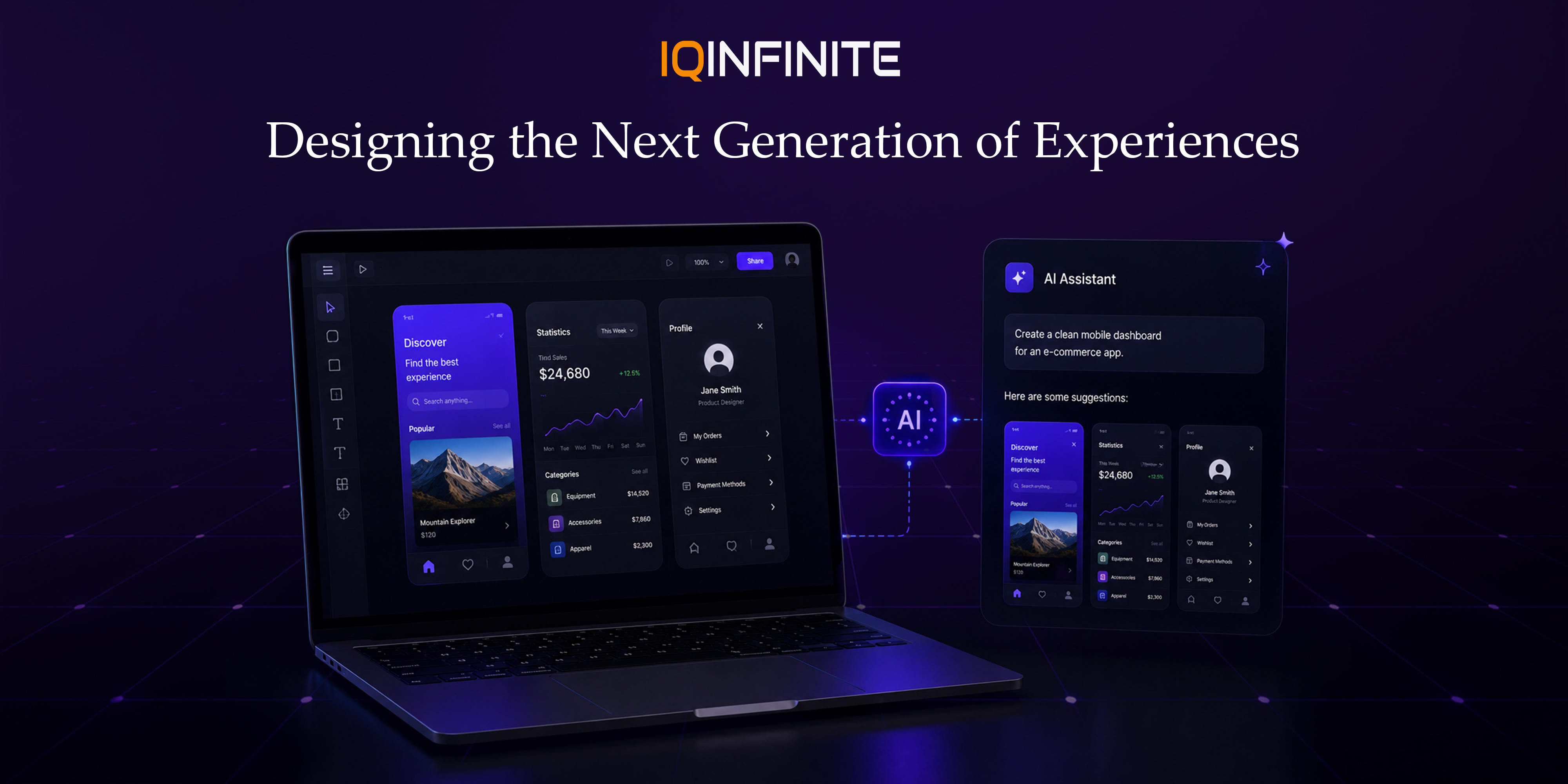
Generative AI is rapidly transforming the way designers create digital experiences. From AI-powered wireframing and user research analysis to personalized interfaces and automated design systems, the impact of artificial intelligence on UX design has become impossible to ignore.
As businesses compete to deliver more personalized, efficient and engaging digital products in 2026, Generative AI is emerging as a powerful tool that helps UX designers accelerate workflows, improve user satisfaction and create intelligent user experiences. However, while AI presents significant opportunities, it also introduces challenges related to usability, ethics, accessibility and user trust.
What is Generative AI in UX Design?
Generative AI refers to artificial intelligence models capable of creating new content, including text, images, layouts, prototypes, code and user interface components.
In UX design, Generative AI can assist with:
In UX design, Generative AI can assist with:
- User research synthesis
- Persona creation
- User journey mapping
- AI wireframing
- Wireframe generation
- UI design recommendations
- Content generation
- Accessibility improvements
- Personalized user experiences
- Design system automation
- UX copywriting
Modern AI design tools leverage Large Language Models (LLMs), multimodal AI, machine learning and AI agents to streamline design workflows while helping teams make data-driven decisions.
Why Generative AI is Becoming Essential for UX Design in 2026
Several trends are driving AI adoption in UX:
- AI-powered product development
- Hyper-personalized user experiences
- Conversational interfaces
- Agentic AI systems
- Predictive UX
- Multimodal interactions
- Voice-first experiences
- No-code and low-code design tools
- Real-time customer behaviour analysis
- AI-assisted design systems
Organizations are increasingly investing in AI-driven UX and modern AI design assistant platforms to reduce design cycles, improve customer engagement and create adaptive digital products.
Key Opportunities of Generative AI in UX Design
1. Faster Design and Prototyping
AI tools can generate:
- Wireframes
- User flows
- Interface layouts
- Design concepts
- Interactive prototypes
Leading solutions such as Figma AI and other advanced AI design tools significantly reduce the time spent on repetitive design tasks, allowing UX professionals to focus on strategy, creativity and innovation.
Benefits:
Benefits:
- Faster product validation
- Reduced design costs
- Shorter development cycles
- Improved team productivity
2. AI-Powered User Research
Analysing thousands of user interviews, surveys, reviews and support tickets manually can take weeks.
Generative AI can:
Generative AI can:
- Summarize feedback
- Identify behavioral patterns
- Detect sentiment trends
- Discover usability issues
- Generate actionable insights
This enables data-driven UX decisions at scale.
Trending Keywords:
Trending Keywords:
- AI user research
- UX analytics
- Customer behavior analysis
- Voice of customer insights
3. Personalized User Experiences
Personalization has become a major competitive advantage.
AI helps create:
AI helps create:
- Dynamic interfaces
- Personalized recommendations
- Adaptive navigation
- Smart content delivery
- Customized onboarding flows
Users increasingly expect experiences tailored to their preferences and behaviour.
4. Improved UX Writing and Content Design
AI can generate:
- Microscopy
- Product descriptions
- Error messages
- Help content
- Onboarding guidance
This helps maintain consistency while improving content quality across products.
Examples:
Examples:
- Personalized onboarding messages
- Smart chatbot responses
- Context-aware guidance
- Dynamic support content
5. Enhanced Accessibility
AI is helping organizations build more inclusive experiences by:
- Generating image alt text
- Detecting accessibility issues
- Improving content readability
- Supporting voice interactions
- Providing real-time translations
Accessibility-focused UX is becoming a critical business and compliance requirement.
6. Smarter Design Systems
AI-powered design systems can:
- Suggest reusable components
- Maintain consistency
- Recommend design improvements
- Automate documentation
- Generate UI variations
This helps large organizations scale design operations efficiently.
Challenges of Using Generative AI in UX Design
While AI offers substantial benefits, designers must address several challenges.
1. Lack of Human Empathy
AI can analyse data but struggles to fully understand:
- Human emotions
- Cultural nuances
- Contextual behaviours
- Psychological motivations
UX remains fundamentally human-centered, requiring empathy-driven decision-making.
2. Design Homogenization
Overreliance on AI-generated layouts can result in:
- Generic interfaces
- Reduced creativity
- Similar user experiences
- Limited brand differentiation
Organizations should balance automation with original design thinking.
3. AI Hallucinations and Inaccuracies
Generative AI occasionally produces:
- Incorrect recommendations
- False assumptions
- Incomplete user insights
- Misleading design suggestions
Human validation remains essential throughout the design process.
4. Privacy and Data Security Concerns
AI systems often rely on large datasets containing user information.
Potential risks include:
Potential risks include:
- Data leakage
- Privacy violations
- Regulatory non-compliance
- Security vulnerabilities
Businesses must ensure compliance with global privacy standards and responsible AI practices.
5. Ethical UX Challenges
AI-driven interfaces can unintentionally create:
- Biased experiences
- Manipulative user flows
- Dark patterns
- Exclusionary designs
Ethical design principles should remain a top priority.
Best Practices for Implementing Generative AI in UX Design
Use AI as a Design Assistant, Not a Replacement
AI should enhance human creativity rather than replace UX professionals.
Successful teams combine:
Successful teams combine:
- Human expertise
- User empathy
- Strategic thinking
- AI-powered efficiency
The most effective UX outcomes occur when designers and AI collaborate.
Prioritize Human-Centered Design
Always validate AI-generated recommendations through:
- User testing
- Stakeholder reviews
- Accessibility audits
- Behavioral research
User needs should guide every design decision.
Build Transparent AI Experiences
Users should understand:
- When AI is being used
- How recommendations are generated
- What data is being collected
- How decisions are made
Transparency increases trust and adoption.
Focus on Responsible AI
Organizations should establish AI governance frameworks covering:
- Data privacy
- Fairness
- Bias mitigation
- Security
- Explainability
Responsible AI practices help reduce risk while improving user confidence.
Continuously Test and Optimize
AI-powered experiences require ongoing monitoring.
Track metrics such as:
Track metrics such as:
- User engagement
- Task completion rates
- Customer satisfaction
- Retention
- Accessibility scores
- Conversion rates
Continuous optimization ensures long-term success.
Emerging Trends Shaping the Future of AI-Powered UX
As artificial intelligence continues to evolve, UX design is entering a new era of intelligent, adaptive and highly personalized experiences. Several emerging technologies are expected to transform how users interact with digital products in the coming years.
Agentic UX: Agentic UX introduces AI-powered agents that can independently perform tasks, make decisions and complete workflows on behalf of users. Instead of simply responding to commands, these intelligent systems proactively assist users, reducing friction and improving productivity across applications.
Predictive User Experiences: Predictive UX leverages machine learning and behavioural analytics to anticipate user needs before actions are taken. By analysing user patterns, preferences and contextual data, interfaces can deliver personalized recommendations, automate repetitive tasks and create more intuitive digital experiences.
Multimodal User Interfaces: Modern users increasingly interact with technology through multiple channels. Multimodal UX combines text, voice, images, video, gestures and touch interactions into a seamless experience, allowing users to engage with products in the most natural and convenient way.
Conversational Interfaces: AI-powered chatbots, virtual assistants and conversational applications are becoming central to digital interactions. Advanced Natural Language Processing (NLP) enables these systems to provide human-like communication, instant support and personalized assistance across websites, mobile apps and enterprise platforms.
Emotion-Aware UX: Emotion AI is enabling interfaces to recognize and respond to user sentiment, engagement levels and behavioural signals. By adapting content, recommendations and interactions based on emotional context, businesses can create more empathetic and user-centric experiences.
Autonomous Design Systems: The future of UX will include self-optimizing design systems powered by AI and machine learning. These systems can continuously analyse user behaviour, generate design improvements, perform automated A/B testing and optimize interfaces in real time to maximize engagement and usability.
Agentic UX: Agentic UX introduces AI-powered agents that can independently perform tasks, make decisions and complete workflows on behalf of users. Instead of simply responding to commands, these intelligent systems proactively assist users, reducing friction and improving productivity across applications.
Predictive User Experiences: Predictive UX leverages machine learning and behavioural analytics to anticipate user needs before actions are taken. By analysing user patterns, preferences and contextual data, interfaces can deliver personalized recommendations, automate repetitive tasks and create more intuitive digital experiences.
Multimodal User Interfaces: Modern users increasingly interact with technology through multiple channels. Multimodal UX combines text, voice, images, video, gestures and touch interactions into a seamless experience, allowing users to engage with products in the most natural and convenient way.
Conversational Interfaces: AI-powered chatbots, virtual assistants and conversational applications are becoming central to digital interactions. Advanced Natural Language Processing (NLP) enables these systems to provide human-like communication, instant support and personalized assistance across websites, mobile apps and enterprise platforms.
Emotion-Aware UX: Emotion AI is enabling interfaces to recognize and respond to user sentiment, engagement levels and behavioural signals. By adapting content, recommendations and interactions based on emotional context, businesses can create more empathetic and user-centric experiences.
Autonomous Design Systems: The future of UX will include self-optimizing design systems powered by AI and machine learning. These systems can continuously analyse user behaviour, generate design improvements, perform automated A/B testing and optimize interfaces in real time to maximize engagement and usability.
Conclusion
Generative AI is revolutionizing UX design by enabling faster prototyping, smarter personalization, improved accessibility and data-driven decision-making. While the technology offers tremendous opportunities, successful implementation requires balancing automation with human creativity, empathy, ethics and user-centered thinking.
As AI-powered experiences become the new standard in 2026, organizations that embrace responsible AI, prioritize user trust and combine intelligent automation with exceptional design practices will be best positioned to create innovative, engaging and future-ready digital products.
As AI-powered experiences become the new standard in 2026, organizations that embrace responsible AI, prioritize user trust and combine intelligent automation with exceptional design practices will be best positioned to create innovative, engaging and future-ready digital products.