
Event-Driven Architecture in Laravel: Building Applications That Scale
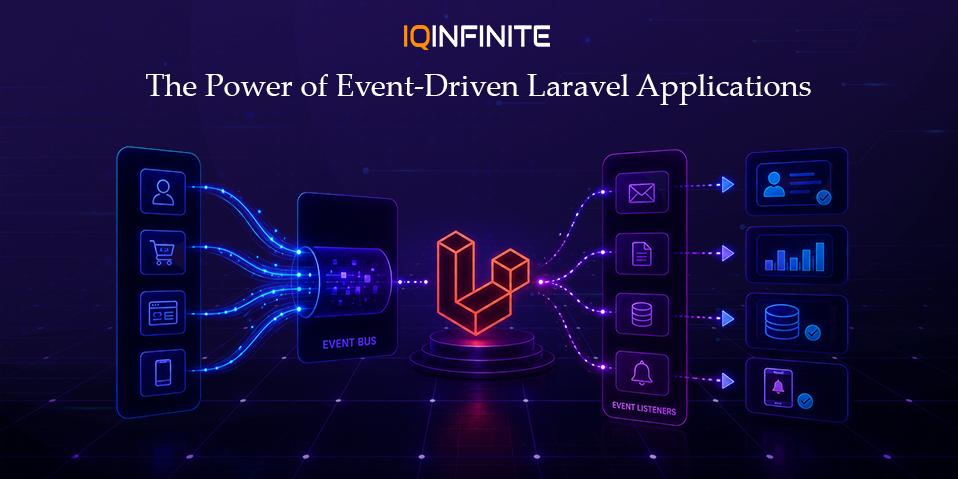
As modern applications grow in complexity, traditional request-response architectures often struggle to handle increasing user traffic, background processing and real-time interactions. Businesses today need systems that can process events efficiently, scale seamlessly and remain responsive even under heavy workloads.
This is where event driven architecture laravel has become an increasingly popular approach. By leveraging Laravel's built-in event system, queues and asynchronous processing capabilities, developers can build scalable applications that handle millions of interactions without sacrificing performance.
Whether you're building SaaS platforms, e-commerce systems, enterprise applications or real-time services, adopting an event-driven approach can significantly improve scalability and maintainability.
What Is Event-Driven Architecture?
Rather than executing all business logic immediately within a request, an application generates events that trigger specific actions independently.
- A user registers an account
- An order is placed
- A payment is completed
- A file is uploaded
This approach helps create highly scalable event driven web applications that remain responsive as workloads increase.
Understanding the Laravel Event System
Laravel events allow developers to decouple application components by separating business actions from the processes that respond to them.
event(new OrderPlaced($order));
- Send confirmation emails
- Update inventory
- Generate invoices
- Trigger analytics events
- Notify administrators
Why Modern Applications Need Event-Driven Architecture
- Slow response times
- Tight coupling between services
- Complex business logic
- Scalability limitations
- Difficult maintenance
Key benefits include:
Improved Scalability
Better Performance
Increased Maintainability
Enhanced Flexibility
Building Asynchronous Laravel Applications
Instead of processing everything during a user request, time-consuming tasks can be moved into queues.
Examples include:
- Sending emails
- Image processing
- PDF generation
- Payment verification
- Data synchronization
- Third-party API communication
Example:
SendWelcomeEmail::dispatch($user);
This significantly improves perceived performance and user experience.
Events and Listeners in Laravel
Creating an event:
php artisan make:event OrderPlaced
php artisan make:listener SendOrderNotification
This architecture keeps business logic clean and organized.
The laravel event system becomes especially valuable as applications grow and workflows become more complex.
Real-World Event Driven Web Applications
Common use cases include:
E-Commerce Platforms
- Payment processing
- Inventory updates
- Shipping notifications
- Customer emails
SaaS Applications
- User onboarding
- Subscription billing
- Usage tracking
- Feature activation
Enterprise Systems
- Workflow automation
- Approval processes
- Audit logging
- Data synchronization
Event-Driven Architecture and Microservices
Instead of services communicating directly, they exchange events through message brokers or queues.
Examples include:
- RabbitMQ
- Apache Kafka
- Amazon SQS
- Redis Streams
Many organizations combine event driven architecture laravel with microservices to support large-scale digital platforms.
Performance Benefits of Asynchronous Laravel Applications
By building asynchronous laravel applications, teams can:
- Reduce response times
- Increase throughput
- Improve system reliability
- Handle traffic spikes efficiently
Without events:
User Request
  └── Send Email
  └── Generate Invoice
  └── Update Analytics
  └── Return Response
With events:
User Request
  └── Create Order
  └── Fire Event
  └── Return Response
Background Workers:
  └── Send Email
  └── Generate Invoice
  └── Update Analytics
Best Practices for Event-Driven Architecture in Laravel
Keep Events Focused
Avoid Heavy Logic in Listeners
Use Queue Workers
Monitor Event Processing
Design for Scalability
These practices help create highly scalable event driven web applications.
The Future of Laravel Architecture
Emerging trends include:
- Event-driven microservices
- Real-time applications
- Serverless architectures
- AI-powered workflow automation
- Distributed systems design
Laravel's event capabilities position it well for these evolving architectural patterns.
Conclusion
The combination of the laravel event system, queues and background processing enables developers to create highly scalable asynchronous laravel applications and modern event driven web applications. As software systems continue moving toward distributed and cloud-native architectures, event-driven design will remain one of the most effective approaches for building applications that scale successfully in 2026 and beyond.