
Enhancing System Reliability Through Modern Observability Practices
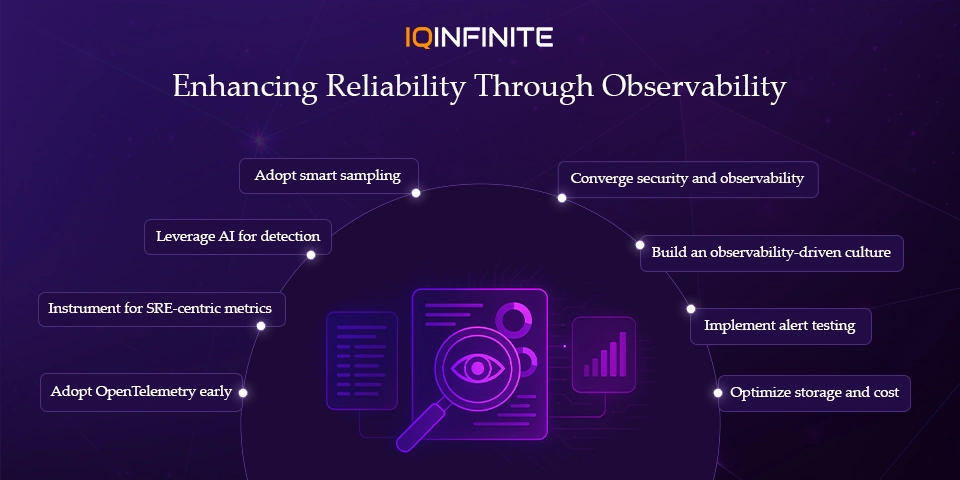
In today's fast-evolving cloud-native world, system reliability is more than just uptime it’s about resilience, fast recovery and proactive stability. Modern observability has become a critical foundation for achieving that kind of reliability. Below, we break down how observability practices are improving system reliability and what’s new and trending in 2025.
Just like platforms such as PlayStation Wrap-Up 2025 rely on real-time data collection, telemetry and analytics to deliver personalized year-in-review experiences to millions of gamers, modern observability uses the same principles to ensure system reliability, performance and resilience at scale.
Why Observability Matters for Reliability
- Beyond Monitoring: Traditional monitoring gives you metrics and alerts (“something’s wrong”), but observability gives context (“why it’s wrong”). This richer context empowers faster root-cause analysis, better-informed SRE decisions and fewer costly outages.
- Complexity is Growing: With microservices, containers, serverless, edge computing and AI-driven components, system architectures are more distributed than ever. Without deep visibility logs, traces, metrics, profiling teams risk blind spots.
- Cost of Failure: High-impact outages are expensive. According to a recent report by New Relic, organizations without full-stack observability are more likely to suffer major outages.
- Dev + Ops Alignment: Observability helps bridge the gap between developers and operations. It enables shared instrumentation, common dashboards and a shared understanding of system behaviour which is critical for reliability.
Key Modern Observability Trends
Here are some of the most significant trends shaping observability today, especially as they relate to reliability:
a) OpenTelemetry Maturity & Standardization
a) OpenTelemetry Maturity & Standardization
- OpenTelemetry (OTel) continues to dominate as the de-facto standard for telemetry metrics, logs, traces and more.
- In 2025, profiling signals (from OTel) are increasingly mainstream. These profiling data help identify code inefficiencies, memory bottlenecks or hot paths that could lead to reliability issues.
- Standardization with OTel reduces vendor lock-in and allows teams to switch or integrate observability tools more flexibly.
b) Observability Shifting Left and Right
- Shift-Left: Observability is not just for production. Developers are instrumenting code earlier, using observability-driven development (ODD). Profiling and telemetry during development helps catch issues before deployment.
- Shift-Right: Observability is extending into edge and user experience. As edge devices proliferate, telemetry is collected from device-level components, giving insight into system behaviour far beyond the data centre.
- In Kubernetes environments, modern observability pipelines centralize telemetry collection, dynamically adapt to changing workloads and intelligently filter data to reduce noise and cost.
c) AI / ML-Powered Observability
- AI is playing an increasingly important role: not just for anomaly detection, but for predictive reliability, root-cause analysis and even automated remediation.
- Generative AI and large language models (LLMs) can help interpret observability data, translate complex telemetry into human-understandable diagnostics and support low-code observability workflows.
- As systems adopt more AI (including AI-native apps), observability must adapt. Monitoring AI models means tracking metrics like model accuracy, data integrity, prompt behavior and edge-case failures (e.g., hallucinations or data poisoning).
- AI agents for SRE: New platforms are emerging that use agentic AI to help SRE teams. For example, Ciroos builds AI “teammates” that proactively investigate anomalies and assist in incident response.
d) Cost-Efficient Telemetry & Data Control
- Data volumes from telemetry are huge and costs can spiral. According to a modern observability roundtable, organizations are increasingly adopting sampling strategies, data filtering and “Bring Your Own Cloud (BYOC)” models to control costs.
- Purpose-built observability data lakes are emerging. Unlike generic databases, these storage systems are designed for high-throughput, structured ingestion of metrics, logs and traces enabling efficient querying and cost-optimized storage.
- Teams are consolidating tools: a survey found that organizations are reducing the number of observability tools they use, helping both with cost and operational complexity.
e) Security + Observability Convergence
- Observability is no longer purely about performance; it's deeply intertwined with security.
- Real-time threat detection: Observability platforms now analyse logs and metrics to detect security anomalies, runtime threats and compliance violations.
- DevSecOps workflows are increasingly integrated with observability: security telemetry (like SBOMs - Software Bill of Materials) and runtime observability help detect vulnerabilities early and continuously.
f) Alert Validation & Reliability Engineering
- Building effective alerts remains a challenge. Too many false positives can lead to alert fatigue and missed alerts lead to unreliability.
- New research proposes validating alerting code early even during development using observability experimentation tools.
- SRE-driven practices: Teams are using Service Level Objectives (SLOs), well-documented runbooks and structured post-mortems to convert observability insights into real reliability improvements, not just noise. As one practitioner put it: “Observability without SLOs & post-mortems isn’t enough.” > “We fixed symptoms but kept hitting similar issues … the problem wasn’t observability … it was the human systems around it.”
g) Smart Sampling & Data Efficiency
- With telemetry exploding in scale, new sampling techniques are being researched. For instance, UniSage, a recent academic framework, proposes “post-analysis-aware sampling” instead of randomly discarding data, it retains traces and logs that are likely to be anomalous or relevant, improving diagnostic coverage while controlling volume.
- Such techniques help observability pipelines remain efficient, actionable and cost-conscious.
Practical Steps to Adopt Observability for Reliability
Here are actionable practices teams can adopt to harness modern observability and boost reliability:
1. Adopt OpenTelemetry early
Standardize on OTel for your metrics, logs, traces and profiling. This gives you flexibility, portability and avoids vendor lock-in.
2. Instrument for SRE-centric metrics Define and measure Service Level Indicators (SLIs) that align with SLOs not just infra metrics, but user experience: latency percentiles, error rates, availability.
3. Implement alert testing
Validate your alert logic along with your code. Use tools/frameworks to simulate alert firing, refine thresholds and reduce false positives.
4. Leverage AI for anomaly detection and root-cause
Use AI/ML platforms (or enable AI in your existing observability stack) to highlight anomalous behaviour, predict failures and suggest remediations.
5. Adopt smart sampling
Use advanced sampling strategies (like post-analysis-driven sampling) to retain critical telemetry without being overwhelmed by data volume.
6. Converge security and observability
Build observability pipelines that ingest security telemetry. Integrate DevSecOps: monitor SBOM, runtime abnormal behavior and threat signals.
7. Build an observability-driven culture
a. Use post-mortems: After incidents, correlate observability data (traces, logs, metrics) to drive learning.
b. Maintain runbooks: For common failure patterns detected via observability, document them.
c. Share dashboards across teams: Align Dev, Ops, Security and SRE around common views.
8. Optimize storage and cost
Consider BYOC or private data lakes for telemetry. Use cost-controls: sampling, filtering, storage-tiering to manage observability spend.
1. Adopt OpenTelemetry early
Standardize on OTel for your metrics, logs, traces and profiling. This gives you flexibility, portability and avoids vendor lock-in.
2. Instrument for SRE-centric metrics Define and measure Service Level Indicators (SLIs) that align with SLOs not just infra metrics, but user experience: latency percentiles, error rates, availability.
3. Implement alert testing
Validate your alert logic along with your code. Use tools/frameworks to simulate alert firing, refine thresholds and reduce false positives.
4. Leverage AI for anomaly detection and root-cause
Use AI/ML platforms (or enable AI in your existing observability stack) to highlight anomalous behaviour, predict failures and suggest remediations.
5. Adopt smart sampling
Use advanced sampling strategies (like post-analysis-driven sampling) to retain critical telemetry without being overwhelmed by data volume.
6. Converge security and observability
Build observability pipelines that ingest security telemetry. Integrate DevSecOps: monitor SBOM, runtime abnormal behavior and threat signals.
7. Build an observability-driven culture
a. Use post-mortems: After incidents, correlate observability data (traces, logs, metrics) to drive learning.
b. Maintain runbooks: For common failure patterns detected via observability, document them.
c. Share dashboards across teams: Align Dev, Ops, Security and SRE around common views.
8. Optimize storage and cost
Consider BYOC or private data lakes for telemetry. Use cost-controls: sampling, filtering, storage-tiering to manage observability spend.
Emerging Challenges & Considerations
- Telemetry Cost Explosion: As you scale, data ingestion and storage can become prohibitively expensive. Smart sampling, data lakes and architecture choices are key.
- Talent & Skills: Not all teams are equipped to interpret advanced telemetry, AI-detected anomalies or profiling signals. You may need to upskill SREs/devs in observability literacy.
- Noise vs Signal: More observabilities doesn’t automatically mean better reliability, bad alerting, alert fatigue or overwhelming dashboards can degrade signal.
- Security Risks: Telemetry often contains sensitive data. Observability pipelines must account for data privacy, compliance (e.g., GDPR) and secure storage.
- AI Trust & Explainability: As AI agents intervene (or suggest fixes), understanding how they make decisions is important. Blind automation without transparency can be risky.
The Future Outlook
Looking ahead, the synergy between observability and reliability is only going to deepen:
- Agentic AI for SRE: Tools like Ciroos are pioneering AI teammates that proactively detect, investigate and even remediate incidents.
- Autonomous Remediation: Observability platforms may not just alert they could take automated, safe actions (rollback, scaling, restart) based on AI inference.
- Observability-as-Code: Teams will increasingly declare observability pipelines, alert rules, sampling strategies and dashboards as code making them part of CI/CD.
- Full-Stack Observability at Scale: As more organizations consolidate tools, they will aim for a unified observability view infrastructure, application, security, user experience to drive reliability decisions.
Conclusion
Modern observability isn’t just a “nice-to-have”; it’s a foundational pillar for system reliability in the cloud-native, AI-infused era. By embracing open standards (like OpenTelemetry), integrating AI, optimizing telemetry costs and driving a culture of observability-driven reliability often referred to internally as CHER (Continuous Health and Error Resilience) engineering teams can build systems that are not just observable but inherently more reliable.
If you're planning to upgrade your observability practices or build a reliability roadmap, these trends and steps can help you stay future-ready.
If you're planning to upgrade your observability practices or build a reliability roadmap, these trends and steps can help you stay future-ready.