
How DevSecOps Reduces Security Risks in Cloud Applications
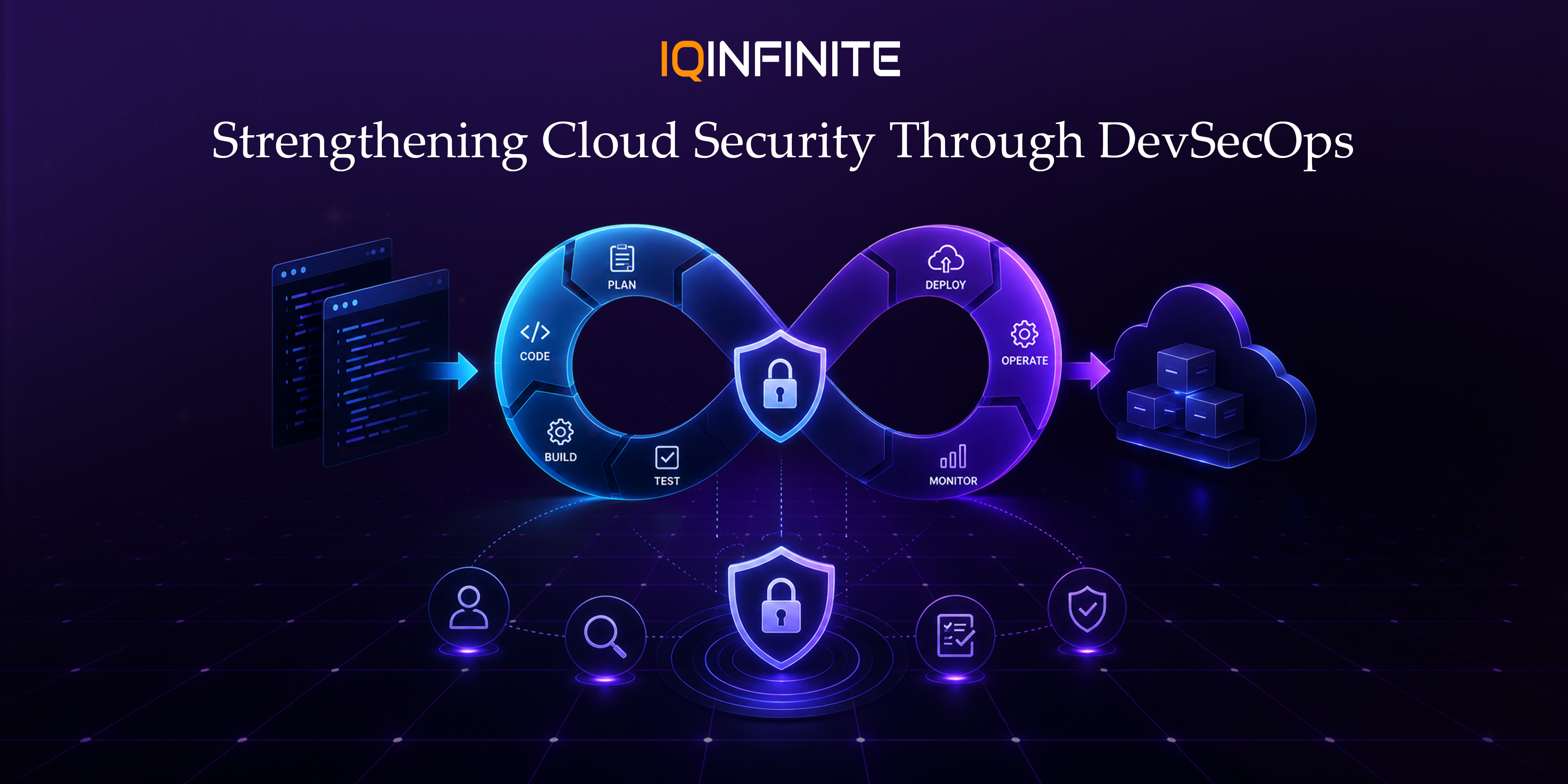
As organizations continue their shift toward cloud-native architectures, the speed of software development has increased dramatically. Businesses now deploy applications multiple times a day using CI/CD pipelines, microservices, containers and serverless technologies. While this rapid innovation accelerates digital transformation, it also expands the attack surface, making cloud applications more vulnerable to cyber threats.
Traditional security practices where testing happens only after development is no longer sufficient. Modern organizations require a proactive approach that integrates security into every stage of the software development lifecycle. This is where DevSecOps plays a critical role.
By embedding security into development and operations, DevSecOps enables businesses to detect vulnerabilities earlier, automate security testing through Cloud Security Automation, improve compliance and reduce cloud security risks without slowing down software delivery.
What is DevSecOps?
Through continuous security automation, vulnerability scanning, compliance validation and real-time monitoring, organizations can build secure cloud applications while maintaining the agility required in today's competitive digital landscape.
Why Cloud Applications Need DevSecOps
Without an integrated security strategy, organizations may face:
- Cloud misconfigurations exposing sensitive data
- Vulnerable open-source libraries and dependencies
- Insecure APIs
- Container and Kubernetes Security issues
- Container security issues
- Compliance violations
- Increased risk of ransomware and data breaches
How DevSecOps Reduces Security Risks
1. Shifts Security to the Beginning of Development
Every code commit is automatically analyzed for vulnerabilities, insecure coding practices, exposed secrets and dependency risks. Developers receive immediate feedback, allowing issues to be fixed before they become costly production incidents.
This approach significantly reduces remediation costs while improving software quality and delivery speed.
2. Automates Security Testing Throughout the CI/CD Pipeline
DevSecOps integrates automated security testing directly into CI/CD pipelines through technologies such as:
- Static Application Security Testing (SAST)
- Dynamic Application Security Testing (DAST)
- Software Composition Analysis (SCA)
- Secret Scanning
- API Security Testing
3. Prevents Cloud Misconfigurations with Infrastructure as Code Security
DevSecOps automatically scans Infrastructure as Code templates to identify:
- Public storage buckets
- Excessive IAM permissions
- Open network ports
- Missing encryption policies
- Insecure firewall rules
4. Protects Containers and Kubernetes Workloads
DevSecOps strengthens container security by:
- Scanning container images for known vulnerabilities
- Verifying trusted images before deployment
- Monitoring Kubernetes clusters continuously
- Enforcing runtime security policies
- Detecting suspicious container behaviour
5. Secures APIs Against Modern Cyber Threats
DevSecOps continuously validates API security by identifying authentication weaknesses, broken authorization, insecure endpoints and configuration errors.
Automated API testing aligned with the OWASP API Security Top 10 helps organizations reduce the risk of data leaks, unauthorized access and API abuse.
6. Continuously Monitors Cloud Environments
Cloud environments are constantly changing as new workloads, users and services are added. DevSecOps incorporates continuous monitoring to detect suspicious activities such as unauthorized access attempts, privilege escalation, unusual network behaviour and runtime threats.
Modern AI-powered monitoring tools analyse system behaviour in real time, enabling security teams to identify anomalies and respond to threats before they cause significant damage.
7. Strengthens Compliance Through Automation
DevSecOps automates compliance checks against standards such as GDPR, HIPAA, SOC 2, PCI DSS and ISO 27001. Instead of preparing for audits manually, organizations continuously validate security policies, maintain audit logs and enforce governance across cloud infrastructure.
This automation simplifies compliance management while reducing operational overhead.
Emerging DevSecOps Trends in 2026
AI-Powered Security Automation:Artificial Intelligence is helping teams detect vulnerabilities faster, prioritize remediation based on risk and reduce alert fatigue through intelligent analysis.
Software Supply Chain Security:Software Supply Chain Security has become a top priority for organizations protecting their software ecosystems. Businesses are implementing Software Bills of Materials (SBOMs), artifact signing, dependency verification and secure build pipelines to strengthen Software Supply Chain Security and reduce third-party risks.
Zero Trust Security:Rather than assuming users or systems are trustworthy, Zero Trust continuously verifies identities, devices and permissions before granting access to cloud resources.
Cloud-Native Application Protection Platforms (CNAPP):CNAPP solutions combine Cloud Security Posture Management (CSPM), Cloud Workload Protection (CWPP), identity security and container security into a single platform, providing comprehensive cloud protection.
Policy as Code:Security and compliance policies are now defined as code, allowing organizations to automatically enforce governance across development, infrastructure and production environments.
Best Practices for Successful DevSecOps Adoption
- Integrate security from the earliest stages of development.
- Automate vulnerability scanning within every CI/CD pipeline.
- Regularly scan open-source dependencies and third-party libraries.
- Secure Infrastructure as Code before deployment.
- Continuously monitor containers, Kubernetes clusters and cloud workloads.
- Implement Zero Trust access controls and least-privilege permissions.
- Automate compliance validation and policy enforcement.
- Educate developers on secure coding practices.
- Continuously update security tools to address emerging threats.
- Monitor software supply chain risks and verify build integrity.
Business Benefits of DevSecOps
Organizations benefit from:
- Faster software releases without compromising security
- Reduced cloud security vulnerabilities
- Lower remediation and incident response costs
- Improved regulatory compliance
- Increased developer productivity through automation
- Better customer trust and data protection
- Stronger operational resilience
- Enhanced visibility across cloud environments
Conclusion
DevSecOps transforms security from a final checkpoint into a continuous, automated process embedded throughout the software development lifecycle. From Shift Left Security and automated CI/CD testing to Infrastructure as Code scanning, Kubernetes protection, AI-powered threat detection and Zero Trust Architecture, DevSecOps enables organizations to proactively reduce security risks while accelerating software delivery.
As businesses continue embracing cloud technologies, adopting DevSecOps is no longer just a technical improvement it is a strategic investment in building secure, resilient and future-ready cloud applications that can thrive in today's rapidly evolving digital landscape.