
DevSecOps in 2026: How Security Automation Is Transforming Modern CI/CD Pipelines
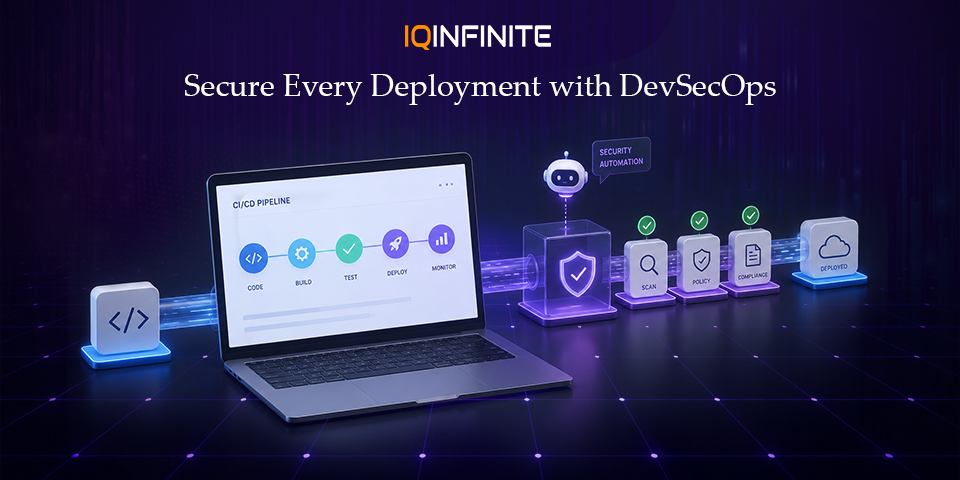
As software development accelerates, organizations are deploying applications faster than ever before. Continuous Integration and Continuous Deployment (CI/CD) pipelines have become essential for delivering features, updates and bug fixes rapidly. However, speed often comes with a challenge—security.
Traditional security processes were designed for slower development cycles, where security reviews happened after coding was complete. In modern environments, this approach creates bottlenecks and increases risk. This is why DevSecOps has emerged as a critical practice for organizations building secure and scalable applications.
By integrating security automation directly into development workflows, teams can strengthen security without slowing innovation.
What Is DevSecOps?
The goal of DevSecOps is to build secure software development practices directly into CI/CD pipelines so vulnerabilities are identified and resolved before they reach production.
- Security by design
- Automated security testing
- Continuous monitoring
- Shift-left security
- Collaboration across teams
Why Security Automation Matters
This is where security automation becomes essential.
Security automation helps teams:
- Detect vulnerabilities early
- Reduce manual security reviews
- Improve compliance
- Accelerate software releases
- Minimize human error
Building a Secure CI/CD Pipeline
A modern secure pipeline typically includes:
Source Code Security
- Security vulnerabilities
- Hardcoded credentials
- Unsafe coding practices
- Dependency risks
Dependency and Package Scanning
Automated dependency scanning helps detect:
- Known vulnerabilities
- Outdated packages
- License compliance issues
Infrastructure Security Validation
Security automation can validate:
- Cloud configurations
- Network settings
- Access permissions
- Compliance requirements
Container Security
- Docker images
- Kubernetes clusters
- Container registries
- Runtime environments
CI/CD Security Best Practices
Shift Security Left
Developers should receive immediate feedback on vulnerabilities while writing code.
Automate Security Testing
Examples include:
- Static Application Security Testing (SAST)
- Dynamic Application Security Testing (DAST)
- Dependency scanning
- Container scanning
Apply Least Privilege Access
This reduces the impact of security incidents.
Continuously Monitor Applications
Continuous monitoring helps identify:
- Suspicious behavior
- Configuration drift
- Unauthorized access
- Runtime vulnerabilities
Secure Secrets and Credentials
Organizations should use dedicated secrets management solutions to protect sensitive information.
The Role of DevSecOps in Secure Software Development
DevSecOps helps organizations:
- Reduce security risks
- Improve compliance readiness
- Accelerate release cycles
- Strengthen customer trust
- Lower remediation costs
Emerging Trends in DevSecOps for 2026
AI-Powered Security Automation
Cloud-Native Security
Compliance as Code
Software Supply Chain Security
Conclusion
Following proven CI CD security best practices and embracing modern secure software development strategies allows organizations to reduce risk, improve compliance and accelerate innovation. As applications become increasingly cloud-native and distributed, DevSecOps will continue to play a critical role in delivering secure, scalable and resilient software systems.