
Cloud Strategy and Consulting: Build a Scalable, Future-Ready Infrastructure
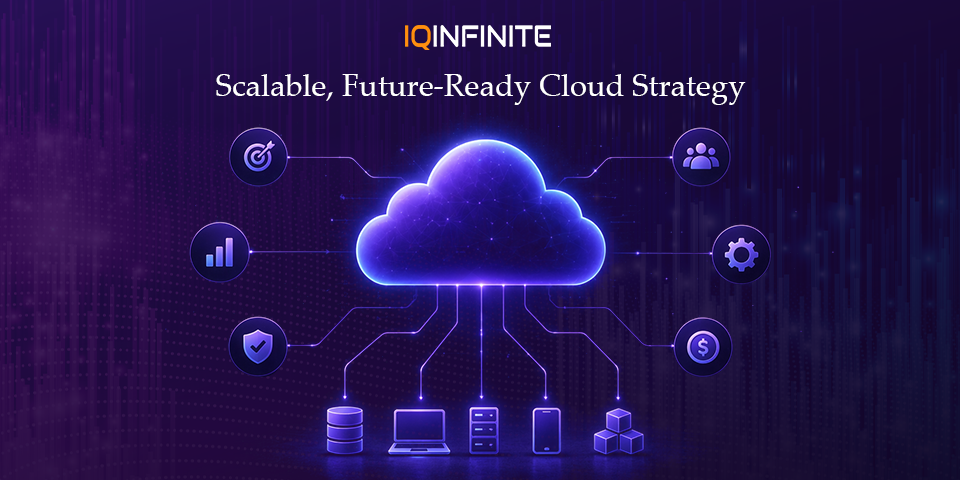
In 2026, cloud is no longer just an IT enabler it is the core operating system of modern businesses. Organizations are shifting from basic cloud adoption to building ,b>AI-driven, resilient and scalable infrastructure that can evolve with changing demands. The role of cloud strategy and consulting has therefore become critical: not just to migrate systems, but to design intelligent ecosystems that support growth, automation and innovation.
The role of cloud strategy consulting has therefore become critical: not just to migrate systems, but to design intelligent ecosystems that support growth, automation and innovation. Businesses are increasingly investing in expert cloud consulting services to create smarter, faster and more secure environments that support long-term success.
If your goal is to create a future proof cloud infrastructure, the strategy must begin far before migration it starts with planning, architecture and a strong cloud readiness strategy.
The Shift: From Cloud Adoption to Cloud Intelligence
Key drivers behind this shift include:
- Explosive growth in AI workloads and data processing needs
- Increasing demand for real-time, low-latency applications
- Rising concerns around security, compliance and data sovereignty
- The need to optimize cloud costs while scaling operations
Key Cloud Strategy Trends in 2026
1. AI-Native Infrastructure (The New Standard)
- AI is embedded into operations (AIOps, AutoOps)
- Infrastructure supports high-performance computing and large-scale data
- AI agents automate routine operations and decision-making
2. Multi-Cloud and Hybrid Cloud Dominance
- 80%+ enterprises now use multi-cloud strategies
- Combines public cloud scalability with private cloud control
- Reduces vendor lock-in and improves resilience
3. Rise of “Neocloud” and Specialized Infrastructure
- Built specifically for GPU-intensive workloads
- Optimized for performance and scalability
- Competing with traditional hyperscalers
4. Infrastructure as Code (IaC) and Platform Engineering
- IaC enables repeatable, scalable deployments
- Platform engineering creates internal developer platforms
- Faster development cycles with fewer errors
5. Cloud Cost Optimization (FinOps)
- Real-time cost monitoring and optimization
- Resource allocation based on usage patterns
- FinOps teams bridging finance and engineering
6. Security, Compliance and Data Sovereignty
- Zero-trust security models
- Region-specific data storage (sovereign cloud)
- Compliance-driven architecture design
7. Sustainable and Green Cloud Infrastructure
- Energy-efficient data centers
- Carbon-aware workload distribution
- Green cloud strategies aligned with ESG goals
The Role of Cloud Strategy & Consulting
A modern cloud strategy focuses on building intelligent, secure and future-ready ecosystems through the following core areas:
1. Cloud Readiness Assessment: Before any transformation begins, organizations must clearly understand their current state. This involves evaluating existing infrastructure, identifying performance bottlenecks and uncovering gaps in scalability, security and operational efficiency.
2. Architecture Design: A well-defined architecture is the backbone of a successful cloud journey. This includes designing hybrid or multi-cloud environments and building systems that are scalable, resilient and ready for AI-driven workloads.
3. Migration & Modernization: Cloud transformation is not just about moving workloads it’s about evolving them. Legacy systems are modernized through containerization, microservices and cloud-native approaches to improve agility and performance.
4. DevOps & Automation: Speed and consistency are critical in modern environments. Implementing CI/CD pipelines and Infrastructure as Code (IaC) enables faster deployments, reduced errors and continuous delivery of value.
5. Cost & Performance Optimization: Cloud efficiency requires continuous monitoring and refinement. Organizations must analyse resource usage, eliminate waste and optimize workloads to balance performance with cost-effectiveness.
6. Security & Compliance Strategy: Security must be embedded at every layer. A zero-trust approach, combined with robust compliance frameworks, ensures data protection while meeting regulatory requirements.
Building a Future-Ready Cloud Infrastructure
- Scalability - Seamlessly handle increasing workloads without compromising performance
- Flexibility - Support dynamic hybrid and multi-cloud strategies
- Intelligence - Leverage AI-driven automation for smarter operations
- Resilience - Ensure high availability and disaster recovery readiness
- Efficiency - Maximize resource utilization while minimizing costs
Conclusion
Organizations that invest in strategic cloud consulting and AI-ready infrastructure will not only scale faster but also gain a significant competitive advantage in an increasingly digital-first world.