
Building Real-Time Dashboards with Laravel and WebSockets
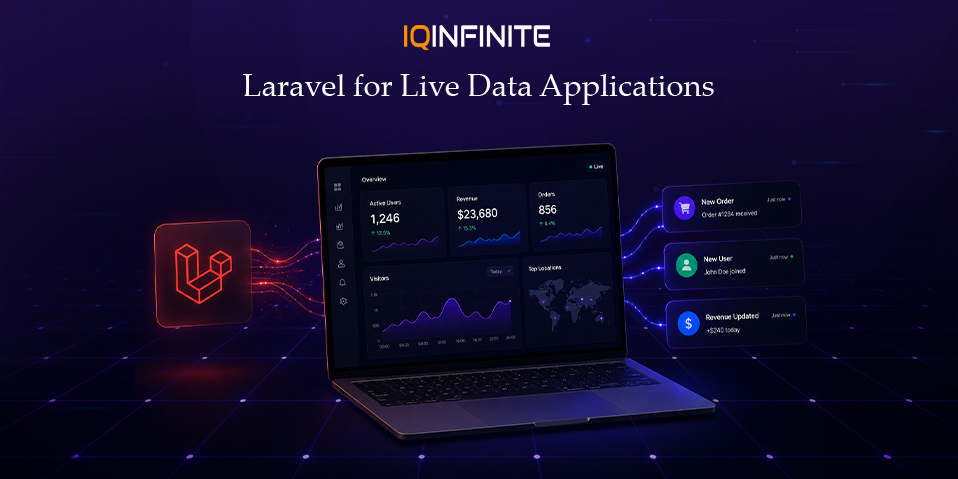
In today's data-driven business environment, users expect information instantly. Whether it's monitoring sales performance, tracking website activity, viewing operational metrics, or managing customer interactions, static dashboards are no longer enough. Modern organizations require real-time visibility into their data to make faster and smarter decisions.
This is where Laravel and WebSockets become a powerful combination. By enabling instant data updates without page refreshes, developers can build highly interactive dashboards that improve user experience and business efficiency.
Why Real-Time Dashboards Matter
Traditional dashboards often require users to manually refresh pages to see updated information. This delay can impact decision-making and reduce productivity.
A modern real time reporting dashboard delivers live updates as data changes, allowing teams to react immediately to important events.
Common use cases include:
A modern real time reporting dashboard delivers live updates as data changes, allowing teams to react immediately to important events.
Common use cases include:
- Sales monitoring
- Customer support dashboards
- Inventory tracking
- Financial reporting
- Logistics management
- Website analytics
- System monitoring
Businesses increasingly rely on real time data visualization to gain instant insights and improve operational performance.
What Are WebSockets?
WebSockets are a communication protocol that enables a persistent connection between the server and client.
Unlike traditional HTTP requests, where the browser repeatedly asks the server for updates, WebSockets allow the server to push updates instantly whenever new data becomes available.
This makes WebSockets ideal for:
Unlike traditional HTTP requests, where the browser repeatedly asks the server for updates, WebSockets allow the server to push updates instantly whenever new data becomes available.
This makes WebSockets ideal for:
- Live dashboards
- Real-time notifications
- Chat applications
- Activity feeds
- Monitoring systems
For modern dashboard development, WebSockets eliminate unnecessary requests and create a seamless user experience.
Why Laravel Is Ideal for Real-Time Applications
Laravel provides built-in support for event broadcasting and real-time communication, making it easier to create dynamic applications.
Developers can leverage:
Developers can leverage:
- Laravel Broadcasting
- Laravel Echo
- WebSockets
- Queue Systems
- Event-Driven Architecture
These features allow applications to deliver updates instantly while maintaining scalability and performance.
Real-Time Data Visualization in Action
One of the biggest advantages of real-time dashboards is the ability to display live information visually.
Examples include:
Examples include:
Sales Dashboards
- Track:
- Revenue updates
- New orders
- Conversion rates
- Product performance
Operations Dashboards
- Monitor:
- Active users
- Support tickets
- Delivery status
- Inventory levels
Analytics Dashboards
- Visualize:
- Website traffic
- User behavior
- Campaign performance
- Application metrics
With effective real time data visualization, businesses can identify trends and take action without waiting for scheduled reports.
Laravel Real-Time Notifications
Another powerful feature is laravel real time notifications.
Instead of requiring users to check for updates manually, notifications can be delivered instantly when important events occur.
Examples include:
Instead of requiring users to check for updates manually, notifications can be delivered instantly when important events occur.
Examples include:
- New customer registrations
- Order confirmations
- Payment status updates
- System alerts
- Support ticket responses
- Inventory warnings
Laravel's event broadcasting system allows notifications to reach users in real time, improving responsiveness and engagement.
Key Components of a Real-Time Dashboard
Successful dashboard development requires more than displaying data.
Modern dashboards typically include:
Modern dashboards typically include:
Live Charts and Graphs
Visualize data as it changes.
Activity Feeds
Display real-time user or system actions.
Notification Systems
Provide immediate alerts for critical events.
Role-Based Views
Show relevant information to different users.
Performance Monitoring
Track application and business performance metrics continuously.
Together, these components create a comprehensive real time reporting dashboard experience.
Together, these components create a comprehensive real time reporting dashboard experience.
Scalability Considerations
As applications grow, real-time systems must handle increasing volumes of data and users.
Best practices include:
Best practices include:
- Using queue workers
- Optimizing database queries
- Leveraging Redis for event broadcasting
- Implementing caching strategies
- Scaling WebSocket servers
These practices ensure that live dashboards remain responsive even under heavy workloads.
Business Benefits of Real-Time Dashboards
Organizations investing in real-time dashboard solutions gain several advantages:
- Faster decision-making
- Improved operational visibility
- Better customer experiences
- Reduced response times
- Increased productivity
- Enhanced business intelligence
By combining Laravel with WebSockets, businesses can transform raw data into actionable insights delivered instantly.
Conclusion
Modern businesses depend on accurate and immediate information. Through effective dashboard development, organizations can build powerful real time reporting dashboards that provide continuous visibility into critical operations.
By leveraging WebSockets, real time data visualization and laravel real time notifications, Laravel developers can create scalable and interactive applications that keep users informed in real time. As demand for live data experiences continues to grow, real-time dashboards are becoming an essential component of modern web applications.
By leveraging WebSockets, real time data visualization and laravel real time notifications, Laravel developers can create scalable and interactive applications that keep users informed in real time. As demand for live data experiences continues to grow, real-time dashboards are becoming an essential component of modern web applications.