
AI-Native Finance: How Intelligent Financial Platforms Are Reshaping Banking in 2026
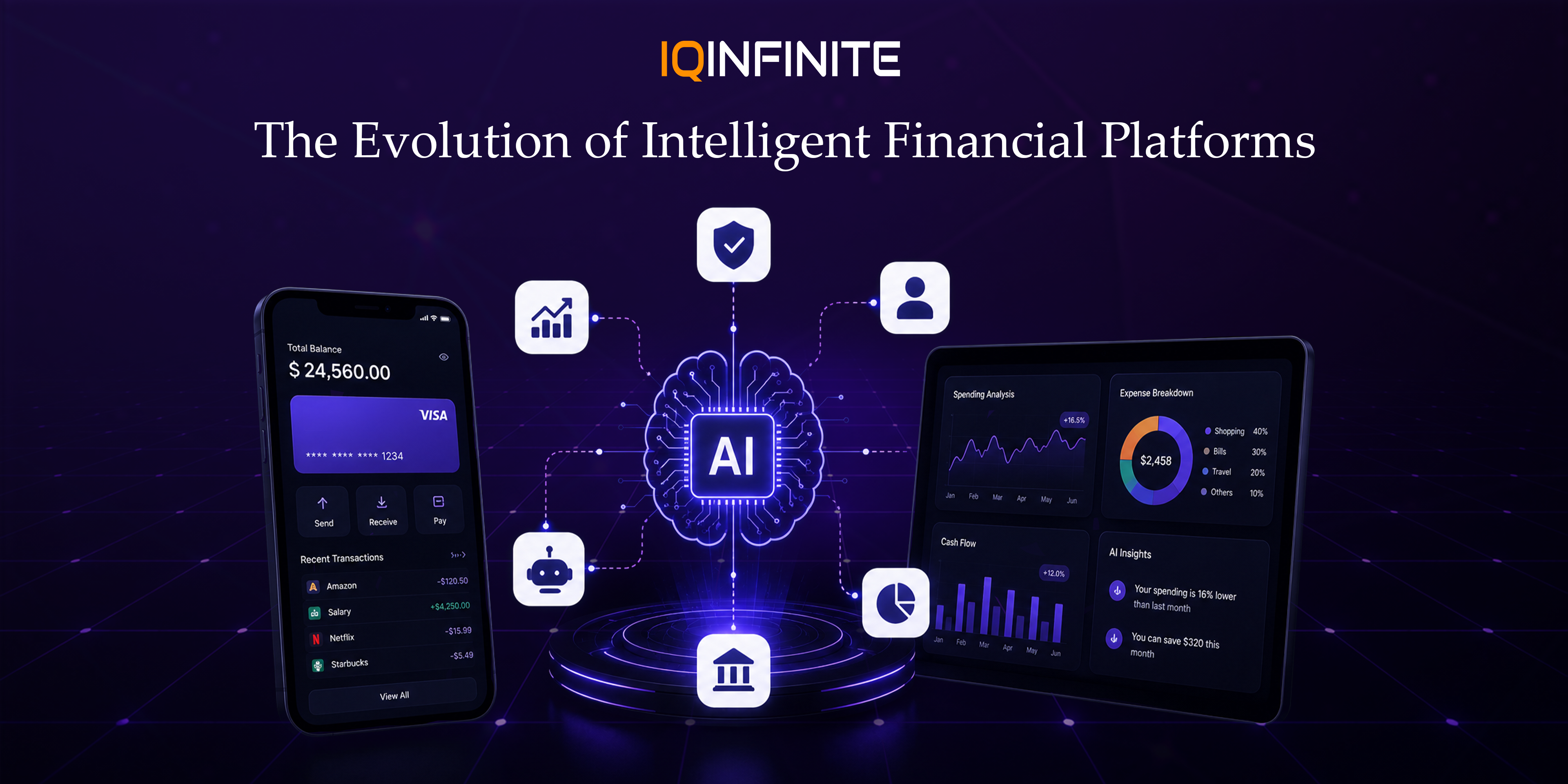
The financial services industry is entering a new era where Artificial Intelligence is no longer an additional feature but the foundation of modern banking. In 2026, AI in Finance is transforming how banks, fintech companies, insurance providers and financial institutions operate by embedding intelligence into every financial process from customer onboarding and fraud detection to lending, wealth management, compliance and real-time financial decision-making. This wave of Digital Banking Innovation is enabling organizations to deliver faster, more secure and highly personalized financial services.
Unlike traditional digital banking systems that rely on predefined workflows, AI-native financial platforms continuously learn from data, automate complex operations and provide personalized financial experiences at scale. Powered by Generative AI, Large Language Models (LLMs), Agentic AI, predictive analytics, real-time data processing and cloud-native architecture, these intelligent platforms are helping financial organizations improve efficiency, reduce operational costs, strengthen security and enhance customer satisfaction.
As competition among banks and fintech companies continues to intensify, AI-native finance has become a strategic investment rather than an experimental technology.
What is AI-Native Finance?
These platforms leverage machine learning models, autonomous AI agents, intelligent automation, natural language processing (NLP) and predictive analytics to make smarter decisions, automate workflows and continuously improve through data.
Instead of relying solely on human intervention, AI-native systems can:
- Analyse millions of transactions instantly
- Detect fraud in real time
- Approve loans intelligently
- Predict customer financial behaviour
- Automate compliance monitoring
- Deliver personalized financial recommendations
- Provide AI-powered virtual banking assistants
Why AI-Native Finance is Growing Rapidly in 2026
These include:
- Generative AI for financial assistance
- AI Agents handling autonomous workflows
- Open Banking APIs
- Real-time payment infrastructure
- Cloud-native banking platforms
- Embedded finance
- Digital identity verification
- Hyperautomation
- Blockchain integration
- Advanced cybersecurity powered by AI
Key Technologies Powering AI-Native Financial Platforms
1. Generative AI for Intelligent Banking
Banks now use AI to:
- Answer customer queries instantly
- Generate financial reports
- Explain loan eligibility
- Simplify investment strategies
- Draft compliance documentation
- Assist relationship managers
Example:
"Can I increase my credit limit?"
"Which investment matches my risk profile?"
"How much EMI will I pay if I borrow ₹15 lakhs?"
AI responds within seconds with contextual recommendations.
2. AI Agents Automating Financial Operations
AI agents can independently execute financial workflows such as:
- Processing loan applications
- Performing KYC verification
- Monitoring suspicious transactions
- Sending payment reminders
- Reconciling invoices
- Handling insurance claims
- Managing investment portfolios
3. Real-Time Fraud Detection
Traditional rule-based fraud detection often fails to identify sophisticated cyber threats.
AI-native platforms continuously monitor:
- Spending behaviour
- Device fingerprints
- Login patterns
- Transaction history
- Geographic locations
- Payment velocity
- Network relationships
This proactive approach significantly reduces financial losses while minimizing false positives.
4. Hyper-Personalized Banking Experiences
AI analyses:
- Income patterns
- Spending habits
- Savings behaviour
- Investment preferences
- Credit history
- Financial goals
- Personalized loans
- Credit card upgrades
- Investment opportunities
- Insurance products
- Budgeting advice
- Savings strategies
5. Predictive Financial Intelligence
Banks use predictive analytics to:
- Estimate loan default risks
- Forecast cash flow
- Predict customer churn
- Detect liquidity issues
- Optimize treasury operations
- Improve investment planning
- Anticipate market trends
AI-Powered Compliance and Risk Management
AI simplifies compliance by automatically:
- Monitoring regulatory updates
- Identifying suspicious transactions
- Generating audit trails
- Detecting Anti-Money Laundering (AML) risks
- Automating Know Your Customer (KYC) verification
- Producing compliance reports
- Assessing operational risks
Cloud-Native Banking Meets Artificial Intelligence
Cloud-native banking platforms enable:
- Faster deployment of AI models
- Real-time data processing
- Secure API integrations
- Scalable infrastructure
- Multi-region disaster recovery
- Continuous software updates
- Lower infrastructure costs
Embedded Finance and AI
Instead of visiting a bank, customers can now:
- Apply for loans during online shopping
- Purchase insurance while booking travel
- Access Buy Now, Pay Later (BNPL) options
- Receive instant financing within business software
AI in Wealth Management
AI-powered wealth management solutions can:
- Analyse global market conditions
- Recommend diversified portfolios
- Rebalance investments automatically
- Predict investment risks
- Monitor financial goals
- Generate personalized retirement plans
Cybersecurity in AI-Native Finance
AI enhances financial security through:
- Continuous threat detection
- Behavioural authentication
- Biometric verification
- Zero Trust security models
- AI-driven phishing prevention
- Malware detection
- Identity protection
- Automated incident response
Benefits of AI-Native Financial Platforms
- Faster loan approvals
- Improved fraud prevention
- Lower operational costs
- Better regulatory compliance
- Enhanced customer experiences
- Personalized financial recommendations
- Higher employee productivity
- Smarter financial forecasting
- Increased operational efficiency
- Scalable digital banking infrastructure
Challenges of AI Adoption in Banking
- Data privacy and governance
- AI model transparency
- Regulatory compliance across regions
- Legacy system integration
- Cybersecurity risks
- AI bias in lending decisions
- High-quality data requirements
- Talent shortages in AI engineering
Future Trends in AI-Native Finance
- Autonomous AI banking agents
- AI-driven financial copilots
- Explainable AI (XAI) for transparent decision-making
- Quantum-ready financial security
- Digital identity powered by decentralized technologies
- Voice-enabled banking experiences
- AI-powered ESG and sustainable finance analytics
- Multi-agent financial ecosystems
- Real-time predictive risk intelligence
- Emotion-aware AI customer support
- Increased adoption of Stablecoins in Finance for secure digital payments and cross-border settlements
Conclusion
As technologies such as Generative AI, Agentic AI, cloud-native infrastructure, embedded finance and predictive analytics continue to evolve, organizations that embrace AI-native platforms will be better positioned to innovate, improve customer trust and remain competitive in an increasingly digital financial landscape.
The future of banking in 2026 is no longer just digital it is intelligent, autonomous and AI-native.