
The Role of Artificial Intelligence in Veterinary Practices
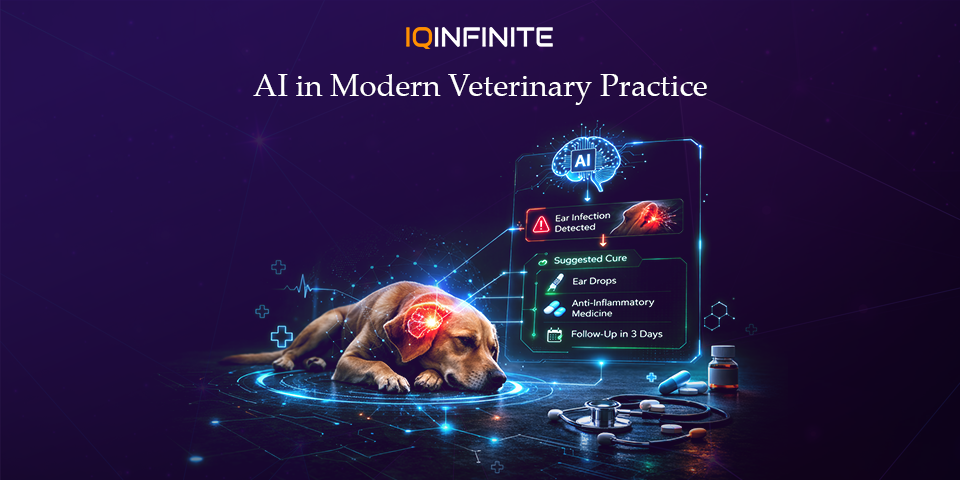
Artificial Intelligence (AI) is rapidly transforming the veterinary industry by enhancing diagnostic accuracy, improving clinical decision-making and streamlining veterinary workflows. The rise of AI in veterinary care is helping professionals deliver faster, smarter and more precise treatments.
With the growing demand for advanced animal healthcare, AI technologies such as machine learning, computer vision and predictive analytics are reshaping how AI is used in veterinary practices across the world.
From diagnosing diseases in pets to monitoring livestock health and preventing zoonotic outbreaks, AI is becoming a powerful tool in modern veterinary practices.
1. AI-Powered Diagnostics: Transforming Disease Detection
One of the most significant contributions of AI in veterinary medicine is its ability to improve diagnostic accuracy and speed. AI-powered imaging systems can analyse radiographs, CT scans and MRI images to detect abnormalities that might be difficult for the human eye to identify.
Key benefits of AI-driven diagnostics include:
Key benefits of AI-driven diagnostics include:
- Faster analysis of X-rays and medical images
- Early detection of tumors and fractures
- Automated analysis of blood and lab samples
- Reduced chances of human diagnostic error
- Faster clinical decision-making for veterinarians
For example, modern AI models can detect fractures on radiographs with extremely high accuracy, helping veterinarians make quicker treatment decisions.
2. Predictive and Preventive Animal Healthcare
Traditional veterinary medicine often focuses on treating diseases after symptoms appear. AI is shifting this approach toward predictive and preventive healthcare.
AI systems can analyse large amounts of data from medical records, wearable sensors and health history to predict diseases before symptoms become serious.
Examples of predictive AI tools in veterinary care:
AI systems can analyse large amounts of data from medical records, wearable sensors and health history to predict diseases before symptoms become serious.
Examples of predictive AI tools in veterinary care:
- Wearable pet health trackers that monitor heart rate, temperature and activity
- AI-powered behaviour analysis that detects unusual animal behaviour
- Early disease detection algorithms for chronic conditions like kidney or heart disease
- Health monitoring dashboards used by veterinarians for continuous patient tracking
This proactive approach helps veterinarians intervene earlier and improve long-term animal health outcomes.
3. AI in Livestock Monitoring and Disease Surveillance
AI is also playing an important role in livestock farming and agricultural veterinary practices. Farmers and veterinarians can now use AI-powered monitoring systems to track the health of animals in real time.
AI technologies used in livestock monitoring include:
AI technologies used in livestock monitoring include:
- Computer vision systems to observe animal movement and posture
- Thermal imaging cameras to detect abnormal body temperature
- Smart sensors that monitor feeding and activity patterns
- AI-based disease detection models for early outbreak warnings
These technologies help detect diseases earlier, reduce livestock mortality and improve farm productivity.
Additionally, AI-based surveillance tools help monitor zoonotic diseases diseases that can spread from animals to humans making them crucial for global health security.
Additionally, AI-based surveillance tools help monitor zoonotic diseases diseases that can spread from animals to humans making them crucial for global health security.
4. Improving Veterinary Workflow and Practice Management
AI is not only transforming medical diagnostics but also improving the daily workflow of veterinary clinics. Administrative work often consumes a large portion of a veterinarian’s time and AI tools help reduce this burden.
There is a growing demand for AI tools for small veterinary clinics as they help streamline operations without requiring large infrastructure investments.
AI-powered veterinary management tools can:
There is a growing demand for AI tools for small veterinary clinics as they help streamline operations without requiring large infrastructure investments.
AI-powered veterinary management tools can:
- Automatically generate clinical notes during consultations
- Organize digital patient records
- Schedule appointments efficiently
- Analyse patient medical history quickly
- Improve communication with pet owners
These innovations further demonstrate the benefits of AI in veterinary medicine in everyday practice management.
5. Telemedicine and Remote Veterinary Care
Telemedicine is another area where AI is making a significant impact. AI-powered telehealth platforms allow veterinarians to conduct virtual consultations and monitor animals remotely.
Benefits of AI-driven veterinary telemedicine:
Benefits of AI-driven veterinary telemedicine:
- Access to veterinary care in rural or remote areas
- Faster triaging of urgent cases
- Remote monitoring of pets and livestock
- Reduced stress for animals that dislike clinic visits
These solutions are especially valuable for large livestock farms and pet owners who live far from veterinary clinics.
6. Challenges and Ethical Considerations
Despite its advantages, AI adoption in veterinary medicine also comes with several challenges.
Key challenges include:
Key challenges include:
- Dependence on high-quality training data
- Potential errors in AI predictions
- Data privacy concerns
- Need for proper veterinarian training in AI tools
- Regulatory and ethical considerations
Therefore, AI should be viewed as a supportive technology rather than a replacement for veterinary expertise.
7. The Future of AI in Veterinary Medicine
The future of AI in veterinary practices is highly promising. As technology continues to advance, veterinarians will have access even more powerful tools for diagnosis, monitoring and treatment planning.
Future trends expected in veterinary AI include:
Future trends expected in veterinary AI include:
- AI-assisted robotic surgery for animals
- More advanced wearable health monitoring devices
- Real-time disease detection using smart sensors
- AI-powered global disease surveillance systems
- Integration of veterinary data with smart farm technologies
These innovations will help veterinarians provide more accurate, efficient and proactive animal healthcare.
Conclusion
Artificial Intelligence is revolutionizing veterinary practices by enabling faster diagnostics, predictive healthcare and improved clinical management. By integrating technologies such as machine learning, computer vision and wearable monitoring devices, veterinarians can provide more proactive and data-driven care for animals.
Although challenges remain, AI will continue to play a crucial role in shaping the future of veterinary medicine, ultimately improving the health and well-being of animals worldwide.
Although challenges remain, AI will continue to play a crucial role in shaping the future of veterinary medicine, ultimately improving the health and well-being of animals worldwide.