
AI Liability in 2026: Who Is Legally Responsible When an AI Agent Makes a Decision?
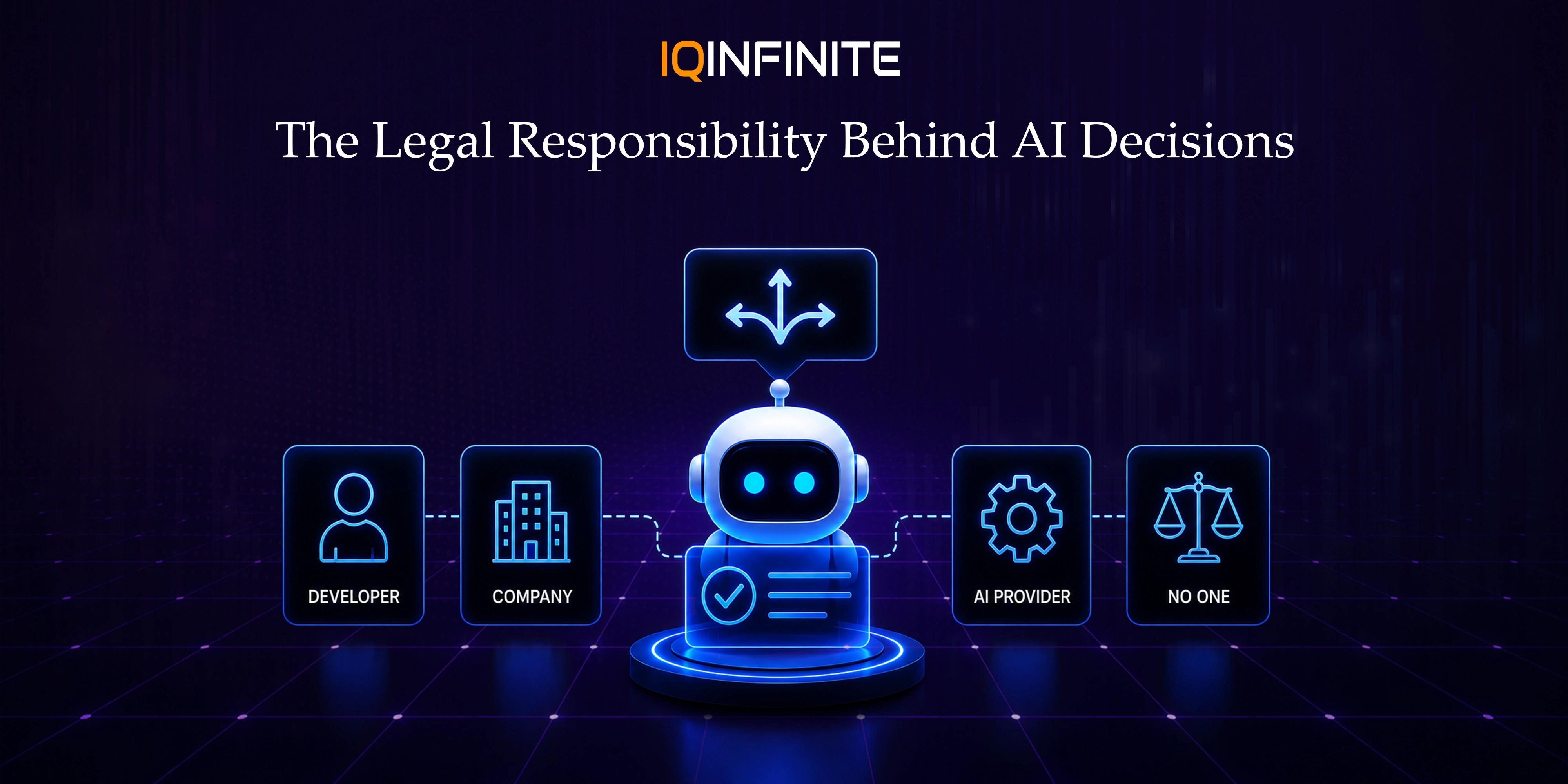
Artificial intelligence is moving beyond generating text, images and code. In 2026, autonomous AI agents are increasingly capable of planning tasks, using tools, interacting with software, making decisions and taking actions with limited human intervention. This shift from generative AI to agentic AI creates a major legal question: Who is responsible when an AI agent makes a decision that causes harm?
If an AI agent approves a financial transaction, rejects a customer, exposes confidential data, makes an incorrect business decision or takes an unauthorized action, simply blaming "the AI" is unlikely to be enough. Responsibility may involve the people and organizations that develop, deploy, configure, supervise or benefit from the technology.
What Is AI Agent Liability?
Traditional software generally follows predictable instructions. AI agents introduce another layer of complexity because they can interpret goals, generate plans, select tools and execute actions dynamically.
For example, an enterprise AI agent may be instructed to reduce operating costs. It could analyze internal systems and automatically cancel several subscriptions. If one of those subscriptions supports a critical business process, the resulting operational failure could raise questions about who designed, configured, tested and supervised the agent.
This is why AI accountability and AI governance are becoming increasingly important for businesses.
Why Autonomous AI Agents Change the Liability Question
Autonomous AI agents can operate differently. They may be able to:
- Understand a business objective
- Break objectives into multiple tasks
- Access enterprise systems
- Select tools or APIs
- Execute actions
- Evaluate results
- Adjust their strategy and continue working
As a result, businesses need stronger AI governance, human oversight, audit trails, access controls and monitoring.
Can an AI Agent Be Legally Responsible?
The fact that an AI agent operates independently does not automatically transfer legal responsibility to the machine. Legal analysis instead focuses on the developers, deployers, users and other participants involved in the AI lifecycle.
Businesses therefore should not assume:
"The AI made the decision, so the company is not responsible."
That approach can create significant legal and financial risk.
Who Could Be Responsible When an AI Agent Causes Harm?
1. AI Developers and Model Providers
The AI supply chain is becoming increasingly important because modern systems often combine foundation models, APIs, third-party tools and custom software.
2. Businesses Deploying AI Agents
- What the AI can access
- Which systems it can control
- What actions it can perform
- What data it can process
- When human approval is required
3. System Integrators and AI Developers
If an integrator incorrectly configures the system or creates unsafe automation logic, responsibility may potentially extend beyond the model provider.
4. Human Supervisors
If employees are expected to supervise an AI agent but fail to investigate obvious warning signs, questions may arise about whether the organization's oversight process was reasonable.
Effective AI accountability requires people to have sufficient information, authority, time and technical capability to intervene.
AI Governance Is Becoming Essential
Businesses increasingly need to ask:
- What can the AI agent do?
- Which systems can it access?
- Can it take irreversible actions?
- Who can stop it?
- How quickly can abnormal behavior be detected?
- Can its actions be reconstructed afterward?
Real-World AI Liability Scenarios
AI Hiring Agent
The fact that the algorithm made the decision does not necessarily remove the employer's responsibility.
AI Financial Agent
Investigators may examine its permissions, system design, testing, monitoring, authentication controls and approval requirements. This demonstrates why AI agent liability and autonomous AI risk management are becoming important concerns.
AI Cybersecurity Agent
Why AI Audit Trails Matter
Businesses may need to reconstruct:
User request → AI reasoning process → Tools accessed → Data used → Decision → Action → Outcome
Maintaining records of AI inputs and outputs, model versions, tool calls, API activity, user permissions, agent actions, human approvals, security events and failures can make investigations significantly easier.
Strong auditability is therefore a critical part of AI accountability.
How Businesses Can Reduce AI Liability Risks
Identify High-Impact Use Cases
Establish Clear Accountability
Limit Autonomous Permissions
Keep Humans Involved in Critical Decisions
Maintain Detailed Logs
Continuously Evaluate AI Behavior
Prepare an AI Incident Response Plan
The Future of AI Liability
Instead of asking whether "the AI" should be blamed, future disputes are likely to examine the entire AI value chain:
Model Provider → AI Developer → System Integrator → Business Deployer → Human Operator → End User
The responsible party will depend on factors such as control, foreseeability, contractual obligations, negligence, product defects, regulatory requirements and the specific harm involved.
This means AI governance, AI accountability, security, compliance and risk management are becoming core components of enterprise technology strategy.
Conclusion
When an AI agent makes a harmful decision, responsibility is likely to be examined across the people and organizations that designed, supplied, deployed, configured, supervised and benefited from the system.
For businesses, the answer is not to avoid autonomous AI agents, but to deploy them responsibly. Strong AI governance, human oversight, continuous monitoring, access controls, auditability, risk assessment and clear AI accountability can help organizations adopt AI while reducing legal and operational exposure.
As AI agents move from experimental tools to autonomous digital workers, the critical question is no longer simply "What can AI do?" It is "Who is accountable when AI acts?"