
Agentic DevOps: The Rise of Autonomous Software Delivery Pipelines
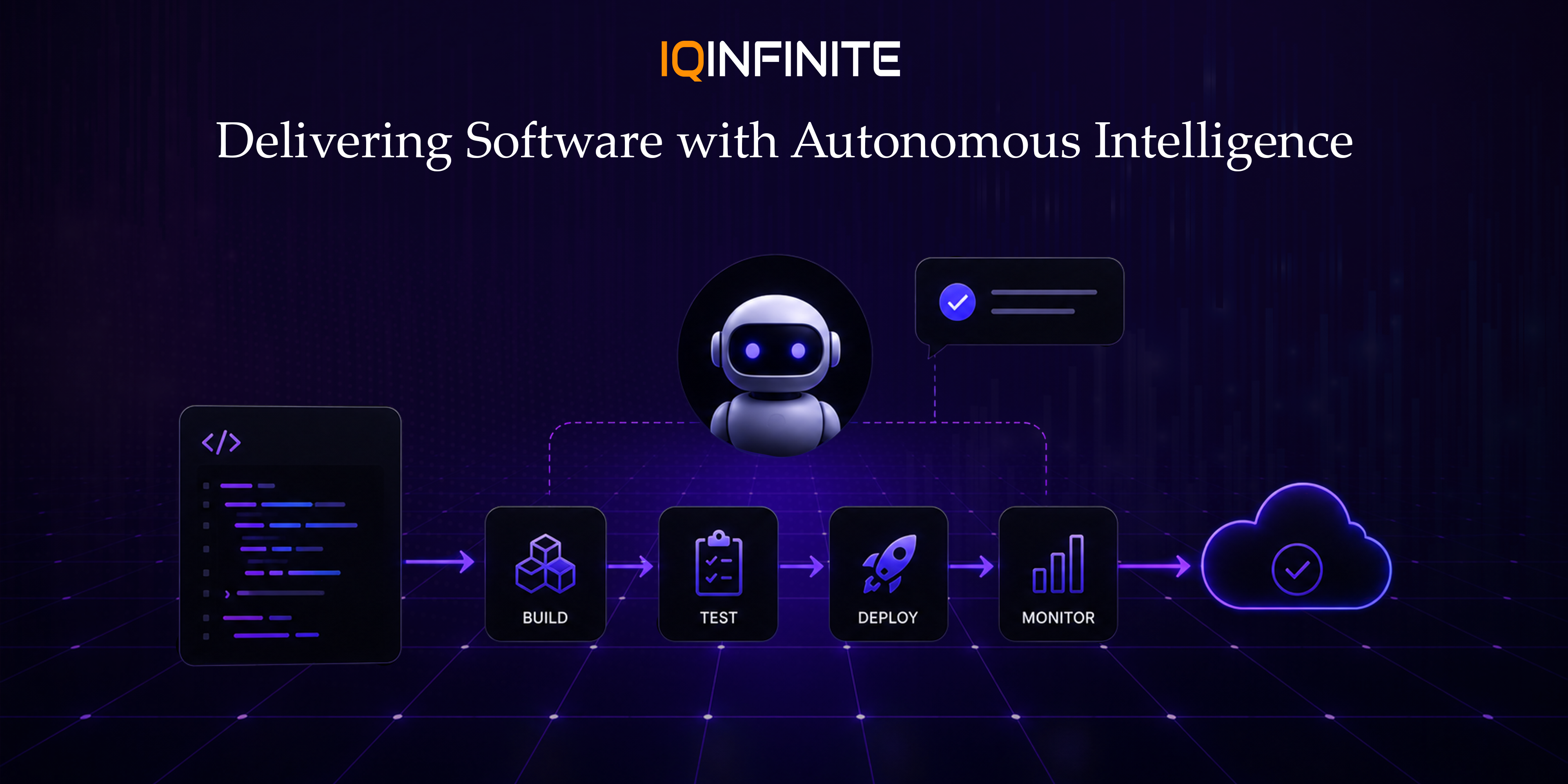
Software development is entering a new era where AI agents don't just assist developers they actively participate in building, testing, securing, deploying and maintaining software. This evolution is known as Agentic DevOps, one of the biggest technology trends shaping software engineering in 2026. This evolution is known as Agentic DevOps, one of the biggest technology trends shaping AI software engineering in 2026.
Unlike traditional DevOps automation, which relies on predefined scripts and workflows, Agentic DevOps introduces autonomous AI agents capable of making decisions, collaborating with engineering teams, identifying issues before they occur and continuously optimizing the entire software delivery lifecycle.
As organizations adopt Generative AI, Large Language Models (LLMs), AI copilots, platform engineering, cloud-native architectures, Kubernetes and GitOps, Agentic DevOps is becoming the foundation of faster, smarter and more resilient software delivery powered by cloud infrastructure automation.
What is Agentic DevOps?
- AI Agents
- Generative AI
- Machine Learning
- Intelligent Automation
- Self-Healing Infrastructure
- Cloud-Native Technologies
- Autonomous Decision Making
These intelligent agents can:
- Generate production-ready code
- Review pull requests
- Execute automated testing
- Detect security vulnerabilities
- Optimize CI/CD pipelines
- Scale cloud infrastructure
- Resolve incidents automatically
- Monitor application health
- Improve deployment strategies
- Learn from previous deployments
Why Agentic DevOps is Trending in 2026
1. AI Agents Are Becoming Enterprise Ready
Organizations are increasingly deploying AI agents for:
- Software engineering
- Infrastructure management
- Incident response
- Security operations
- Cloud optimization
- Release management
2. Faster Software Delivery
Agentic DevOps helps organizations achieve:
- Continuous Integration (CI)
- Continuous Delivery (CD)
- Continuous Deployment
- Faster Release Cycles
- Zero-Touch Deployments
- Automated Rollbacks
3. Intelligent CI/CD Pipelines
Agentic pipelines dynamically adjust based on:
- Code quality
- Test coverage
- Infrastructure health
- Deployment risk
- Application performance
- Security findings
4. Predictive Incident Management
Using real-time telemetry, AI continuously analyzes:
- Logs
- Metrics
- Events
- Traces
- Infrastructure behavior
Core Components of Agentic DevOps
AI Coding Agents
- Writing code
- Refactoring applications
- Creating APIs
- Updating documentation
- Fixing bugs
- Generating unit tests
Autonomous CI/CD Pipelines
- Build applications
- Execute tests
- Validate releases
- Deploy to staging
- Deploy to production
- Roll back failed releases
AI-Powered Infrastructure Management
- Scaling workloads
- Managing Kubernetes clusters
- Optimizing cloud costs
- Detecting unhealthy nodes
- Restarting failed services
- Balancing workloads
Intelligent Security Automation
AI agents continuously perform:
- Vulnerability scanning
- Secret detection
- Dependency analysis
- Container security checks
- Compliance validation
- Policy enforcement
Self-Healing Systems
AI agents automatically:
- Restart services
- Replace failed containers
- Recover unhealthy servers
- Fix configuration drift
- Trigger rollbacks
- Restore backups
Benefits of Agentic DevOps
Accelerated Software Delivery
Benefits include:
- Shorter development cycles
- Faster feature delivery
- Reduced manual effort
- Continuous innovation
Improved Software Quality
Organizations experience:
- Fewer production bugs
- Better code consistency
- Higher test coverage
- Improved application stability
Lower Operational Costs
Businesses save costs by minimizing:
- Manual deployments
- Infrastructure management
- Incident response
- Repetitive maintenance tasks
Enhanced Developer Productivity
AI assists with:
- Code generation
- Documentation
- Testing
- Debugging
- Deployment
- Monitoring
Stronger Security
This results in:
- Faster remediation
- Reduced security risks
- Improved compliance
- More secure software releases
Real-World Use Cases
SaaS Platforms
- AI-assisted deployments
- Automated rollback strategies
FinTech
- Compliance automation
- Fraud monitoring integrations
Healthcare
- HIPAA-compliant deployments
- Predictive incident detection
E-commerce
- Performance optimization
- Intelligent release management
Manufacturing
- Predictive maintenance
- Edge infrastructure automation
Best Practices for Implementing Agentic DevOps
- Start with AI-assisted automation before enabling full autonomy.
- Define governance policies for AI-driven deployment decisions.
- Integrate security into every stage of the CI/CD pipeline.
- Implement comprehensive observability with logs, metrics and traces.
- Continuously evaluate AI agent performance and accuracy.
- Use Infrastructure as Code (IaC) for consistent and repeatable environments.
- Establish human approval workflows for high-risk production changes.
- Continuously train AI models using deployment insights and operational data.
The Future of Autonomous Software Delivery
Over the next few years, AI agents will increasingly:
- Collaborate with development teams.
- Manage cloud infrastructure independently.
- Optimize application performance in real time.
- Detect and resolve incidents automatically.
- Continuously improve deployment strategies using operational feedback.
- Orchestrate complex multi-agent workflows across engineering, security and operations.
Conclusion
Businesses that embrace Agentic DevOps today will be better positioned to innovate, scale and compete in an AI-driven digital landscape. As autonomous software delivery pipelines become the industry standard, investing in Agentic DevOps is no longer just a technological upgrade it is a strategic advantage.